
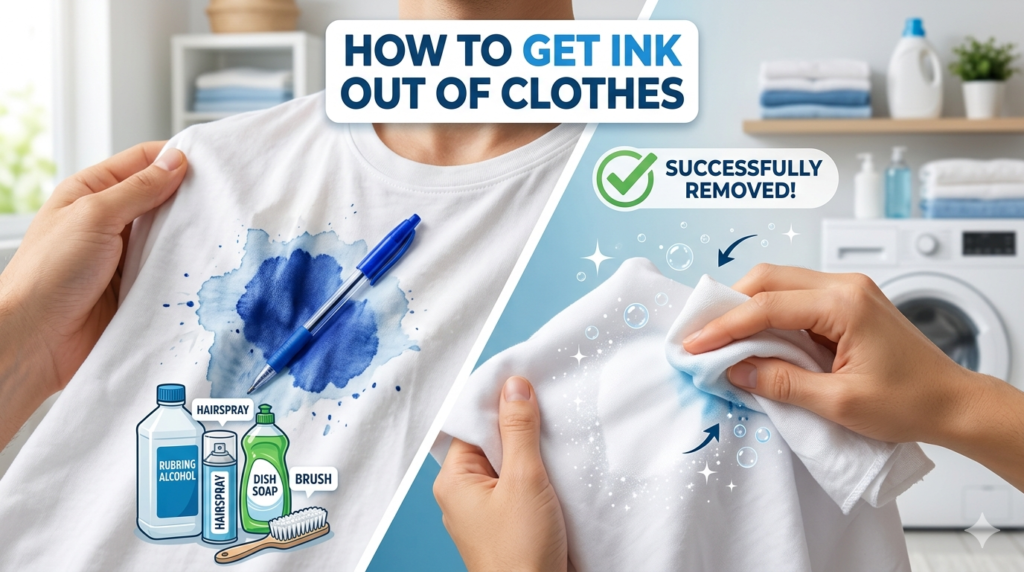
How to Get Ink Out of Clothes: The Ultimate Stain Removal Guide
It happens in a flash: a ballpoint pen leaks in your front shirt pocket, a marker bleeds through a canvas tote bag, or a gel pen gets accidentally tossed into the dryer, leaving a constellation of dark blue splotches across an entire load of clean laundry. The initial reaction is almost always panic, followed by the assumption that the garment is permanently ruined.
However, an ink stain is not a death sentence for your wardrobe. Successfully removing ink comes down to a simple rule of chemistry: you must match the solvent to the specific base of the ink. Treating a water-based ink stain the same way you treat an oil-based ink stain can permanently set the pigment into the fabric matrix.
If you want to rescue your favorite garments from a pen disaster without thinning the fabric or bleeding the dyes, this science-backed guide will show you exactly how to get ink out of clothes safely.
The Chemistry of Ink: Identify Your Enemy First
Before you grab a cleaning agent from your pantry, look closely at the type of pen that caused the damage. In the textile and laundry industries, ink stains are divided into three distinct categories:
1. Water-Based Inks (Gel Pens, Fountain Pens, Washable Markers)
Water-based inks are the easiest to remove because the pigment is suspended in a liquid that naturally dissolves in water. If you catch these stains while they are still wet, they can often be flushed out completely with minimal chemical intervention.
2. Oil-Based Inks (Standard Ballpoint Pens)
Ballpoint pen ink is thick, fast-drying, and suspended in an oil or paste base designed to stay permanent on paper. Because oil repels water, tossing a ballpoint pen stain straight into a standard wash cycle will do absolutely nothing to lift the pigment. You need a solvent that can break down the oil base first.
3. Permanent Inks (Sharpies and Industrial Markers)
Permanent markers utilize an alcohol-soluble carrier combined with synthetic resins that bond tightly to porous fibers. These are the most resilient stains to treat at home and require strong, targeted solvents to break the chemical bond without dissolving the fabric itself.
                       INK STAIN REMOVAL CHEAT SHEET

  INK TYPE          | SOLUBILITY   | BEST REMOVAL AGENT   | CAUTION
  ------------------|--------------|----------------------|----------------------
  Gel / Fountain    | Water-Based  | Liquid Detergent     | Don't let it dry out
  Ballpoint Pen     | Oil-Based    | Rubbing Alcohol / DIY| Blot, never rub
  Sharpie / Permanent| Resin-Based  | Isopropyl Alcohol    | Test on hidden seam
Step-by-Step: How to Get Ink Out of Clothes
No matter which type of pen caused the spill, never rub or scrub an ink stain. Rubbing forces the liquid dye deeper into the core of the fabric threads and spreads the perimeter of the stain outward, making it twice as large. Instead, always use a firm, localized blotting motion.
Method A: For Ballpoint and Permanent Ink (The Alcohol Solvent Flush)
To lift an oil- or resin-based ink stain, you must use a solvent like rubbing alcohol (isopropyl alcohol).
-
Step 1: Lay the stained garment flat on a hard surface, placing a clean, white paper towel directly underneath the stain inside the clothing layers. This acts as a “blotting pad” to catch the ink as it liquefies, preventing it from bleeding through to the back of the shirt.
-
Step 2: Dip a clean microfiber cloth or a cotton swab into rubbing alcohol and gently dab it directly onto the ink. You will see the ink instantly begin to liquefy and bleed onto the paper towel beneath it.
-
Step 3: Keep blotting with a fresh, dry section of your cloth. As the paper towel underneath absorbs the ink, slide a clean section of paper towel under the spot. Repeat this process until no more ink transfers onto your cloth.
-
Step 4: Rinse the area thoroughly with cold water, apply a drop of liquid laundry detergent directly to the spot, and rinse it one final time before washing.
Method B: For Gel and Water-Based Ink (The Enzyme Lift)
Because gel ink dissolves in water, your main goal is to flush out the pigments before they dry and lock into the fabric matrix.
-
Step 1: Flush the stain from the backside of the fabric using a stream of cold running water. This pushes the loose ink particles out of the fibers rather than forcing them all the way through the shirt.
-
Step 2: Mix a solution of equal parts heavy-duty liquid laundry detergent and warm water. Apply it directly to the stain.
-
Step 3: Let the detergent sit on the fabric for 10 to 15 minutes. The active enzymes in premium detergents will break down the organic binders in the gel ink.
-
Step 4: Blot the area gently with a damp cloth, then wash the item on the warmest cycle recommended by the garment’s care label.
The Ultimate Dryer Rule: Always inspect the garment before putting it into the clothes dryer. If a shadow of the ink stain remains after washing, the intense heat of the dryer will permanently bake the residual pigment into the fabric, making it nearly impossible to remove later. If the stain isn’t gone, repeat the treatment process while it is still wet.
Professional Stain Removal When the Stakes Are High
While DIY methods work wonders on standard cotton t-shirts and sturdy denim, treating ink stains on high-value, delicate, or structured luxury items is an entirely different story. Attempting to scrub rubbing alcohol onto a premium silk blouse, a tailored wool blazer, or an expensive designer dress can easily strip the fabric dyes, leave permanent water rings, or destroy the delicate texture of the weave.
When an expensive wardrobe piece is on the line, outsourcing the emergency to a professional dry cleaners service is the safest option. Professional dry cleaners utilize specialized, non-water-based chemical spotting boards and targeted vacuum extractors that pull the pigment out of luxury fibers safely without compromising the garment’s structure. For your everyday high-end clothes that don’t require dry cleaning but still demand meticulous attention, our premium wash and fold laundry service ensures your garments are sorted, treated, and cleaned by fabric experts using commercial-grade stain solutions.
The threat of ink damage is a major concern for commercial sectors as well. In the hospitality and short-term rental industries, a rogue pen left in a guest’s pocket can destroy an entire batch of premium sheets and duvet covers during processing. Partnering with a specialized Airbnb laundry service ensures that contaminated linens are flagged, treated with industrial-grade oxidizing agents, and restored to pristine condition before the next check-in.
For high-volume business operations, medical facilities, and corporate environments, handling uniform care internally can quickly drain staff productivity and inventory budgets. Utilizing a dedicated commercial laundry service keeps your team presentable and professional load after load. Similarly, in the fine dining industry, ink, wine, and grease can instantly ruin costly tabletop settings. A professional tablecloth and linen laundry service relies on automated chemical auto-injection systems and industrial pressing machinery to completely eliminate stubborn stains, delivering a flat, crisp finish that keeps your dining room looking immaculate.
Conclusion
Learning how to get ink out of clothes is an invaluable skill that can save your favorite wardrobe investments from early retirement. By identifying the type of ink you are fighting, acting quickly while the stain is fresh, blotting instead of scrubbing, and keeping the garment far away from the dryer until the pigment is completely gone, you can defeat even the toughest pen leaks.
If you are dealing with a severe ink spill, or if you simply don’t want to risk handling a delicate fabric at home, let the fabric specialists take the stress off your hands. Contact Bolt Laundry today to learn more about our comprehensive residential and commercial fabric care solutions or to schedule a convenient contactless pickup.
