
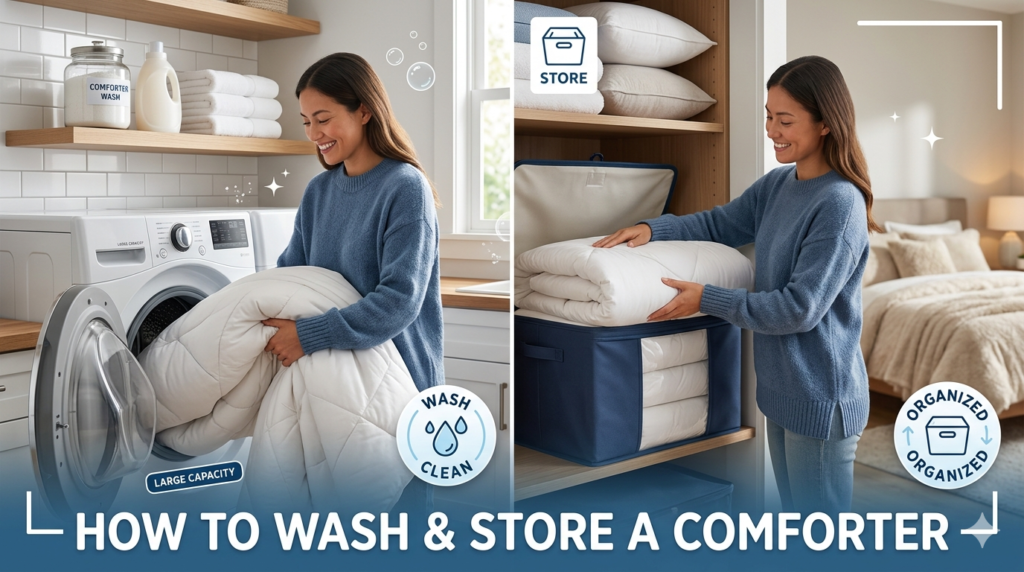
How to Wash and Store a Comforter: The Seasonal Bedding Guide
When the seasons shift and the weather warms up, swapping out your heavy winter bedding for lighter sheets is a household milestone. But far too many people make the mistake of pulling a thick down comforter or heavy quilted duvet off the bed, folding it up tightly, and stuffing it directly into a plastic bin or a dark closet until next winter.
Storing bedding without proper cleaning and stabilization is a recipe for disaster. Over months of use, comforters absorb an incredible amount of body oils, sweat, dead skin cells, and microscopic dust mites. If left untreated in storage, those organic elements oxidize—leading to permanent yellow discoloration, fiber decay, and a stubborn, musty odor that a standard wash cycle can’t fix.
If you want to protect your investment in premium bedding and ensure your blankets emerge from hibernation fresh, fluffy, and completely sanitized, this definitive guide is for you.
1. Machine Size Matters: The Threat of Residential Washers
The absolute biggest hurdle when it comes to washing a comforter at home is physical space. Standard residential top-load washing machines with a central agitator column should never be used to wash a comforter. The agitator will violently pull at the corners of the heavy, water-logged blanket, resulting in ripped seams and shredded internal insulation.
Even in modern, front-load residential machines, a queen or king-size comforter will completely fill the drum. When fabric is crammed tightly into a washer with zero room to move, two things happen:
-
Incomplete Rinsing: The detergent cannot freely circulate through the dense layers of fabric, leaving a sticky chemical residue behind that actually attracts dirt and triggers skin allergies.
-
Mechanical Strain: The extreme weight of a soaking wet comforter can easily throw your home washer’s drum off balance, causing loud thumping, spinning errors, and costly mechanical wear.
If your comforter does not have at least several inches of breathing room around it when placed inside the drum, it needs to be processed in a high-capacity commercial machine.
                       COMFORTER WASHING MATRIX

  BEDDING TYPE     | MACHINE WORKABLE?  | IDEAL TEMP | KEY DRYING DETAIL
  -----------------|--------------------|------------|---------------------------
  Down & Feather   | Commercial HE Only | Cool       | Low Heat + Tennis Balls
  Synthetic Poly   | Commercial HE Only | Warm       | Medium Heat
  Wool / Silk Fill | NO (Dry Clean Only)| N/A        | Air Stabilized Only
2. Step-by-Step: How to Wash a Comforter Natively
If you have access to a large, front-loading machine, follow this strict fabric-care protocol:
Step 1: Inspect and Pre-Treat
Spread the comforter out flat under bright lighting. Look for localized stains from coffee, body oils, or cosmetics. Pre-treat these spots using a enzyme-based stain lifter and a soft microfiber cloth, gently dabbing the fluid into the weave. Checking the structural integrity of the stitching is equally vital; if there is a tiny tear in a down-filled comforter, a single wash cycle will fill the machine with escaping feathers.
Step 2: Choose the Right Soap and Settings
-
Detergent: Use a minimal amount of mild, low-suds liquid detergent. Avoid powdered soaps, which frequently clump inside dense internal batting.
-
The Cycle: Select a Gentle or Bedding cycle with cool or warm water.
-
The Extra Rinse: Crucially, program an extra rinse and spin cycle. Flushing out every molecule of soap is mandatory to prevent the internal filling from matting together.
3. The Critical Phase: Defeating Internal Moisture
Drying a comforter is a slow, meticulous process. If the inner core of a down or alternative-down comforter remains even slightly damp when placed into a storage container, it will develop toxic mildew and a sour smell within weeks.
-
Low and Slow: Set your dryer to low heat. High heat can melt synthetic microfiber shells and scorch delicate natural down clusters, stripping them of their natural insulation properties.
-
The Tennis Ball Trick: Toss three clean tennis balls or wool dryer balls into the drum with the comforter. As the machine tumbles, the balls continuously break up heavy clumps of wet feathers or polyester padding, allowing heat to penetrate evenly and restoring the blanket’s original, cloud-like loft.
-
Rotate Every 30 Minutes: Every half hour, pause the dryer, pull the comforter completely out, shake it out thoroughly to redistribute the filling, and place it back in facing a different direction.
4. Archival Storage: Ditch the Plastic Vacuum Bags
Once your bedding is flawlessly clean and completely dry, how you store it matters immensely. While space-saving vacuum plastic bags are incredibly popular, they are highly damaging to premium bedding.
Vacuum sealing compresses the delicate internal down feathers or synthetic fibers so tightly that it can permanently snap the stalks or collapse the loft structures. When you unpack it next winter, the blanket will be flat, thin, and unable to trap heat effectively. Furthermore, plastic traps ambient humidity; a single drop of condensation inside a plastic bag can rot your bedding over the summer.
Instead, wrap your clean comforter loosely in a breathable cotton storage bag, an old linen pillowcase, or clean muslin cloth. This keeps dust mites and pests away while allowing ambient air to circulate freely.
Seamless Bedding Solutions for Home and Business
Managing large, high-volume household items like oversized king comforters, thick mattress protectors, and heavy wool blankets requires a massive commitment of time, specialized chemicals, and large-scale equipment. For busy families and professionals, trying to execute this process correctly at home can quickly derail an entire weekend.
Outsourcing these bulky loads to a professional wash and fold laundry service guarantees that your heavy winter bedding is sanitized in massive, industrial-grade commercial extractors and tumble dryers, returning to you perfectly fluffed and completely dry. For luxury bedding assets like custom silk duvets, delicate embroidered shams, or wool-filled comforters that cannot touch water, trusting them to an expert dry cleaners service ensures total safety through gentle, fluid-based stabilization.
The stakes are even higher for commercial operators throughout our service markets. If you run a high-end short-term rental, your property’s reputation depends entirely on fresh, spotless, and smelling-free bedding. Partnering with a specialized Airbnb laundry service provides total peace of mind, ensuring that heavy comforters, blankets, and towels are seamlessly rotated between guest stays without missing a beat.
For high-capacity hospitality venues, boutique hotels, and corporate retreats, handling this volume internally strains staff labor and overhead. Utilizing a dedicated commercial laundry service streamlines your logistics, while our specialized commercial tablecloth and linen laundry service ensures that all your customer-facing fabric assets look immaculate, drape beautifully, and leave a flawless first impression.
Conclusion
Taking the time to properly wash, dry, and store your comforters at the end of the season protects your financial investment and ensures a clean, healthy sleep environment when the cold weather returns. By avoiding tight plastic bags, choosing commercial-scale capacities, and ensuring total core dryness, you can defeat mold and maximize fabric longevity.
If your seasonal laundry pile is too big for your home appliances to handle, let the professionals take care of the heavy lifting. Contact Bolt Laundry today to schedule a convenient contactless pickup and give your premium bedding the elite care it deserves.
