
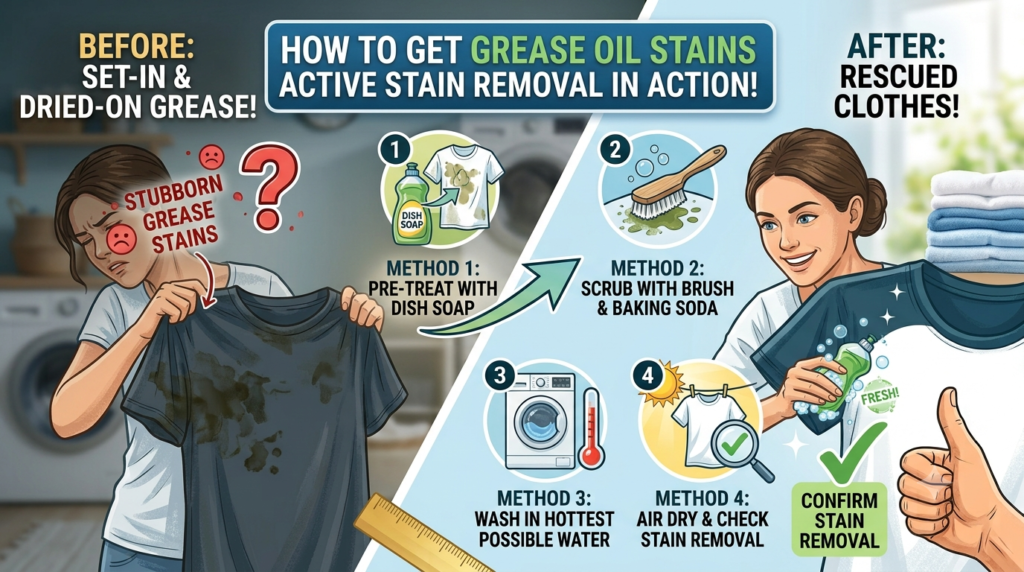
How to Remove Grease Stains From Clothes Using Household Items
We have all been there: a stray drop of salad dressing drops onto your favorite shirt, or butter splatters during dinner prep. Suddenly, you’re left with a dark, translucent circle that ruins the look of your clothes.
Because grease and oil are hydrophobic (meaning they completely repel water), tossing a stained shirt directly into a standard wash cycle usually won’t work. The diluted laundry soap can’t break down the heavy oil molecules on its own, and if that garment hits the high heat of the clothes dryer, the oil can bake permanently into the fabric fibers.
Fortunately, you do not need expensive, specialized chemicals to save your wardrobe. You can easily remove fresh or light grease stains using common household items you already have in your kitchen cupboard and pantry.
                       GREASE CLEANING HOUSEHOLD MATRIX

  STAIN TYPE        | PRIMARY AGENT         | APPLICATION METHOD
  ------------------|-----------------------|---------------------------------
  Fresh / Wet Oil   | Cornstarch / Powder   | Layer generously to draw out moisture
  Set-In / Heavy    | Liquid Dish Soap      | Scrub directly to break lipid bonds
  Stubborn Residue  | White Vinegar Flush   | Rinse thoroughly to strip remaining film
The Science of Grease: Why Household Items Work
To defeat a grease spot, you have to break down its molecular structure. Cooking oils, butter, and automotive grease are lipids. Standard water simply slides right off them.
To lift grease out of a delicate fabric knit, you need two things: an absorbent to pull the wet, loose oil upward out of the fibers, and a surfactant (a molecule that can bind to both oil and water simultaneously) to break up the remaining grease bonds so they can wash away down the drain.
Step-by-Step: The Kitchen Dish Soap and Powder Method
This classic household remedy is highly effective for everyday oil and food grease spills. It relies on two pantry staples: a fine absorbent powder (like cornstarch, baby powder, or baking soda) and a concentrated liquid dish soap (like blue Dawn).
The Process
Grab a clean, dry white paper towel and press it firmly against the fresh grease stain for 30 seconds. Blot straight down to absorb the excess liquid oil. Avoid rubbing side-to-side, which pushes the grease deeper into the weave and spreads the stain outward.
Sprinkle a thick layer of cornstarch, baking soda, or baby powder directly over the spot. Let it sit undisturbed. The fine, micro-porous powder acts like a tiny sponge, pulling the loose grease out of the fabric threads. You will notice the powder starting to clump up as it absorbs the oil. Brush the clumps away gently.
Pour a few drops of concentrated liquid dish soap directly onto the stained area. Use an old, soft toothbrush or your fingertips to gently work the soap into the fabric using small, circular motions. Dish soap contains heavy-duty grease-cutting surfactants designed to attach to lipids and tear them apart.
Turn the garment inside out and run hot water directly through the back of the stain. Flushing from the inside out pushes the emulsified grease and soap out of the front of the fabric, rather than forcing it further into the shirt.
Pro Tip for Stubborn Stains: If a trace of the dark ring remains after rinsing, soak the spot in a 50/50 mix of warm water and distilled white vinegar for 10 minutes before placing it into your washing machine. The acetic acid helps cut through any remaining oily film. Always air-dry the item after washing to ensure the stain is completely gone before putting it in the dryer.
Professional Textile Care for Heavy Stains and Large Loads
While treating a single grease spot at the kitchen sink is simple, dealing with large piles of stained clothes, delicate designer silk blouses, or structured wool garments can quickly become overwhelming. Using the wrong household treatment on high-value clothing can cause color bleeding or fabric wear.
Outsourcing your premium wardrobe to a professional wash and fold laundry service guarantees your clothes are handled with advanced, fabric-safe surface-active agents that lift stubborn organic residues without altering the texture. For delicate garments like tailored wool suits, fine evening wear, or silk items that cannot tolerate water agitation, trusting an expert dry cleaners service is essential. Dry cleaning uses specialized, water-free solvents that dissolve oils and greases effortlessly, protecting fine finishes and preventing shrinkage.
Managing grease extraction is also a critical operational requirement for many local business sectors:
-
Boutique Airbnbs and Vacation Rentals: Guests frequently cook, leaving stubborn butter and cooking oil stains on premium dining linens and bedding. Partnering with a specialized airbnb laundry service provides heavy-duty stain treatment and commercial-grade sanitization that protects your textile investments.
-
Gyms, Salons, and Medical Operations: Treatment rooms, physical therapy clinics, and spas deal daily with massage oils, lotions, and heavy creams that quickly ruin towels. A reliable commercial laundry service provides deep chemical extraction to keep your business linens pristine and compliant.
-
Fine Dining and Culinary Venues: Tablecloths and cloth napkins are constantly exposed to animal fats, cooking oils, and wine spills. A dedicated tablecloth and linen laundry service relies on heavy industrial steam presses and commercial lipid-cleaving enzymes to deliver flawless tablescapes that elevate your guests’ dining experience.
Conclusion
A grease stain doesn’t mean you have to throw away a great piece of clothing. By using an absorbent powder to pull out the loose oil and a grease-cutting dish soap to break down the remaining lipids, you can easily save your wardrobe using simple household items.
If your hampers are overflowing with tough stains and you want to save time on laundry day, let the fabric care experts handle the work for you. Contact Bolt Laundry today to view our straightforward local pricing and schedule a convenient, contactless door-to-door laundry pickup.
