
Beyond the Label: What is Dry Cleaning and How Does It Actually Work?
We have all looked at the care tag on a luxury suit, structured wool coat, or delicate silk dress and spotted those definitive words: Dry Clean Only.
For most of us, dropping clothes off at the cleaner feels a bit like a magic trick. You hand over a stained, wrinkled garment, and a few days later, you receive it back on a wire hanger, perfectly pressed, fresh, and wrapped in protective plastic.
But what actually happens behind those swinging doors? Despite its deceptive name, dry cleaning is not dry at all. Your clothes get completely wet—just not with water. By looking at the science and professional steps behind the process, you can understand exactly why this specialized treatment keeps your finest clothes looking pristine.
                       THE TEXTILE WASHING SPECTRUM

  METHOD            | PRIMARY FLUID        | TARGET MATERIAL      | FIBER BENEFIT
  ------------------|----------------------|----------------------|-----------------------
  Standard Laundry  | Water + Detergent    | Cotton, Synthetics   | Flushes sweat/dirt
  Dry Cleaning      | Liquid Solvent       | Silk, Wool, Rayon    | Prevents fiber swell
  Wet Cleaning      | Specialized Eco-H2O  | Tailored Delicates   | Hyper-precise control
The Core Science: Why “Dry” Cleaning is Essential
To understand why dry cleaning works, you have to understand how water interacts with premium fabrics.
Natural fibers like wool, silk, and structured rayon are highly absorbent. When they are submerged in water, the individual fibers swell, stretch, and weaken. As a washing machine spins and agitates the wet garment, these swollen fibers rub against each other, causing them to lock into a shrunk, distorted shape once they dry. Water can also dissolve water-soluble dyes, causing rich colors to bleed or fade prematurely.
Dry cleaning solves this problem by completely replacing water with a liquid, hydrocarbon-based chemical solvent (traditionally perchloroethylene, or modern eco-friendly alternatives like siloxane).
Because these chemical solvents contain zero water molecules, the textile fibers do not swell or change shape during the cycle. The solvent flows smoothly through the cloth weave, dissolving oils, body fats, and embedded grime effortlessly while keeping the physical shape of the garment perfectly intact.

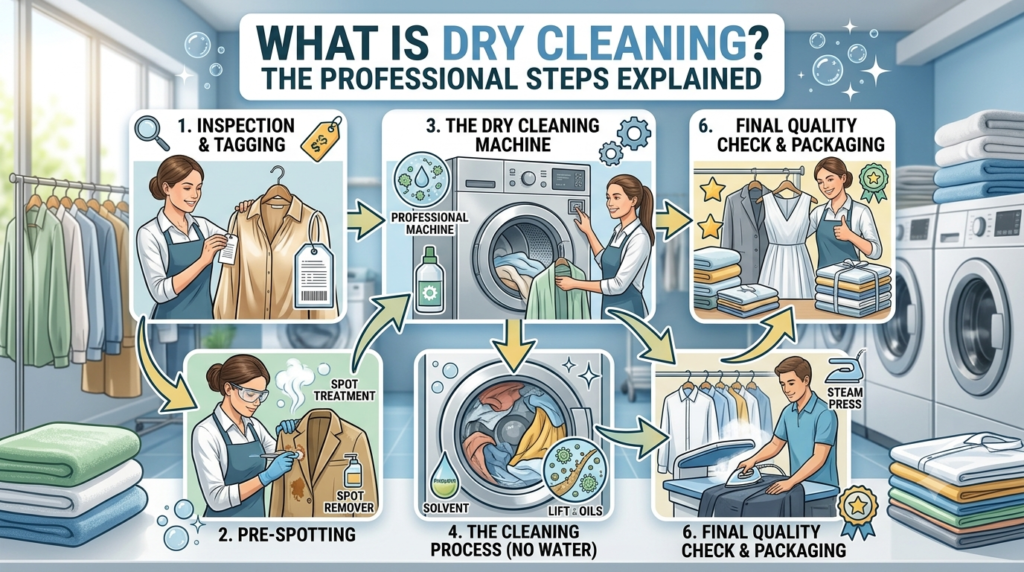
The 6 Steps of the Professional Dry Cleaning Process
The journey of a dry-cleaned garment is a precise, multi-stage restoration process that combines chemical science with expert hand-finishing.
The Operational Edge: When to Outsource Your Wardrobe
While maintaining an organized laundry routine at home is excellent for everyday basics, high-value wardrobe items and premium household linens require specialized commercial care to preserve their texture and longevity.
Outsourcing your premium garments to a professional wash and fold laundry service guarantees your cottons, synthetics, and everyday linens are cleaned using precise commercial systems. For delicate fabrics, structured suits, or items labeled Dry Clean Only, trusting an expert dry cleaners service is essential. Professional dry cleaning completely eliminates the risk of fabric shrinkage, fiber fraying, and color bleeding, keeping your professional wardrobe looking crisp and extending its lifespan.
Managing complex textile extraction is also a vital operational requirement across many business sectors:
-
Boutique Airbnbs and Hospitality: High-end guest experiences depend on immaculate, crisp presentation. Utilizing a specialized airbnb laundry service ensures bedding, duvets, and premium towels receive deep chemical sanitization, protecting your properties from stubborn stains and maintaining high guest ratings.
-
Corporate, Medical, and Service Uniforms: Employees in corporate, clinical, or upscale service settings need to look professional every single day. Partnering with a reliable commercial laundry service streamlines your uniform inventory logistics, ensuring your team always looks sharp.
-
Fine Dining and Event Venues: Table linens and drapes quickly absorb cooking smoke, oils, and wine spills. A dedicated tablecloth and linen laundry service uses commercial steam presses and targeted lipid-cleaving enzymes to deliver flawless tablescapes that elevate your guests’ dining experience.
Conclusion
Dry cleaning isn’t just an alternative to standard washing—it is an essential chemical process designed to preserve fragile fibers, protect rich colors, and lift tough, oil-based grease stains without the damaging structural effects of water.
If your professional wardrobe is piling up or you want to save valuable time on laundry day, let our garment care experts do the heavy lifting for you. Contact Bolt Laundry today to view our straightforward local pricing and schedule a quick, contactless door-to-door pickup.
