
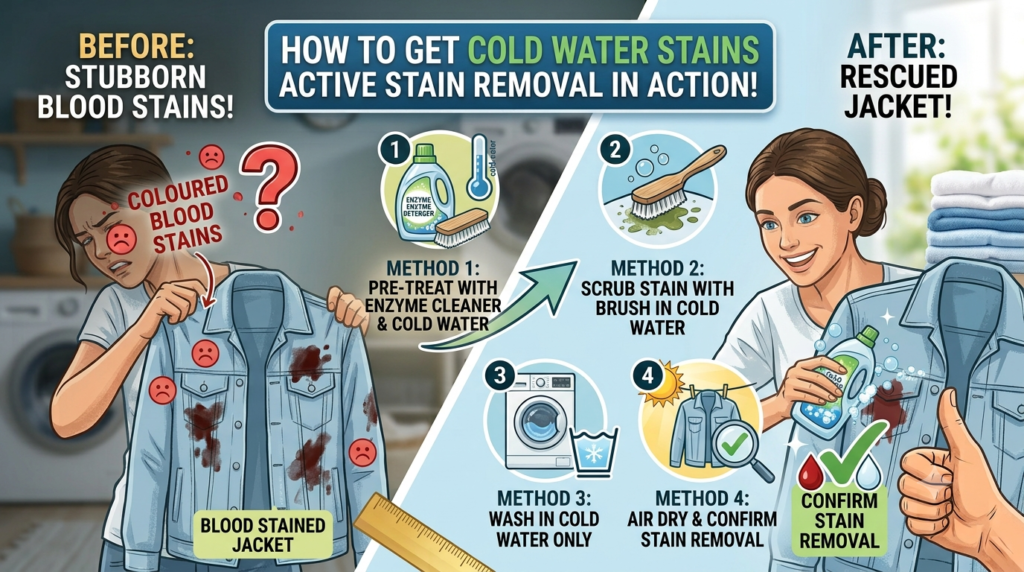
How to Get Blood Stains Out of Clothes (Without Using Hot Water)
Discovering a blood stain on your clothing—whether from an accidental paper cut, a nosebleed, or a scraped knee—can immediately trigger a sense of urgency. It looks dramatic, stands out vividly against fabric, and carries a reputation for being notoriously permanent.
When trying to clean it up quickly, your first instinct might be to toss the garment straight into a warm or hot washing machine cycle. This is the single biggest mistake you can make.
When it comes to biological fluids, heat is the ultimate enemy. To safely remove blood from fabric without leaving a permanent dark outline, you must stick strictly to cold-temperature extraction techniques. By understanding the cellular structure of organic stains, you can completely erase fresh or dried spots using common household agents.
                       COLD BLOOD EXTRACTION MATRIX

  STAIN CONDITION     | PRIMARY CLEANING AGENT | FUNCTIONAL MECHANISM
  --------------------|------------------------|---------------------------------
  Fresh / Wet Blood   | Ice-Cold Water Flush   | Dissolves unbound hemoglobin
  Active / Stubborn   | Hydrogen Peroxide (3%) | Oxidizes and breaks protein chains
  Dried / Set-In      | Enzymatic Detergent    | Microbially digests organic matter
The Molecular Biology of a Blood Stain: Why Warmth Ruins Fabric
To successfully eliminate blood from clothing, you have to look at its chemical composition. Blood is highly complex, packed with organic cellular matter, iron, and a heavy binding protein called hemoglobin.
When blood remains in a cold or room-temperature liquid state, these proteins are loose and soluble in water. However, the moment you introduce hot water or the high heat of a clothes dryer, you trigger a rapid process called thermal denaturation.
The heat essentially “cooks” the proteins, causing them to unfold and permanently bind to the synthetic or natural fibers of the textile. At the same exact time, the iron in the blood oxidizes under heat, forming a rusty chemical bond that permanently dyes the fabric.
The Golden Rule of Biological Stains: Always keep the temperature down. As long as you keep the fabric away from heat, the stain remains chemically open and highly reversible.
Fresh Organic Spotting on White Fabric. Source: Dormer.ie
Step-by-Step: The Cold Water and Peroxide Extraction Method
This highly effective method works wonders on fresh or moderately dried spots. It utilizes simple household items to lift the biological matter out of the garment fibers without damaging the material.
The Process
Alternative Method for Delicate or Dark Fabrics
Because hydrogen peroxide has mild, natural bleaching properties, it can occasionally leave a faded spot on dark or highly sensitive fabrics like silk or dark denim. For these garments, use a safe, non-bleaching household alternative:
-
The Salt-Paste Method: Mix two tablespoons of table salt with one tablespoon of cold water to form a thick, gritty paste. Spread the paste directly over the damp stain. The crystalline structure of salt naturally dehydrates the organic material, pulling the iron particles up and away from the fabric. Let it rest for 30 minutes, brush off the dry paste, and rinse thoroughly under cold water.
Professional Textile Care and Sanitization
Managing complex biological extractions at home can be stressful, particularly when dealing with large volumes of laundry or fragile designer garments. A minor oversight—like an accidental warm water rinse—can instantly set an organic mark for life.
Outsourcing your premium wardrobe to a professional wash and fold laundry service guarantees your clothing is processed using commercial-grade, temperature-controlled systems. These advanced setups use precise chemical auto-injectors to neutralize biological residues safely. For high-value suits, fragile silks, or structured outerwear that cannot tolerate standard machine agitation, utilizing an expert dry cleaners service is essential. Professional dry cleaning relies on specialized fluid solvents to dissolve organic stains completely without using water, avoiding fabric shrinkage and preserving color.
Expert biological stain removal is an essential operational requirement across many local commercial sectors:
-
Medical, Dental, and Wellness Clinics: Healthcare operations generate linens, scrubs, and lab coats that require absolute sanitization. Partnering with a specialized commercial laundry service ensures full regulatory compliance, applying targeted enzymatic formulas that completely eliminate organic residues while maintaining pristine, professional standards.
-
Boutique Hotels and Airbnbs: Minor guest injuries can lead to sudden property damage on high-end white bedding or expensive bath towels. Utilizing a dedicated airbnb laundry service provides rapid, industrial-strength cold processing that completely restores linen assets, saving you from expensive replacement costs.
-
Salons, Spas, and Fitness Centers: High-volume operations face daily challenges with stains from treatments, lotions, and organic residues on towels and wraps. A reliable commercial laundry partner streamlines your inventory logistics, delivering sanitized, fluffy, and fresh linens directly to your door.
Conclusion
Getting an organic spot on your favorite outfit doesn’t mean it’s destined for the trash. By remembering the cardinal rule—always use cold water—and leveraging household essentials like hydrogen peroxide or table salt to break down hemoglobin molecules, you can easily rescue your wardrobe from permanent damage.
If your household hampers are piling up with tough stains, or your local business needs reliable linen care, let the professionals handle the work. Contact Bolt Laundry today to view our straightforward local rates and schedule your first contactless door-to-door laundry pickup.
