
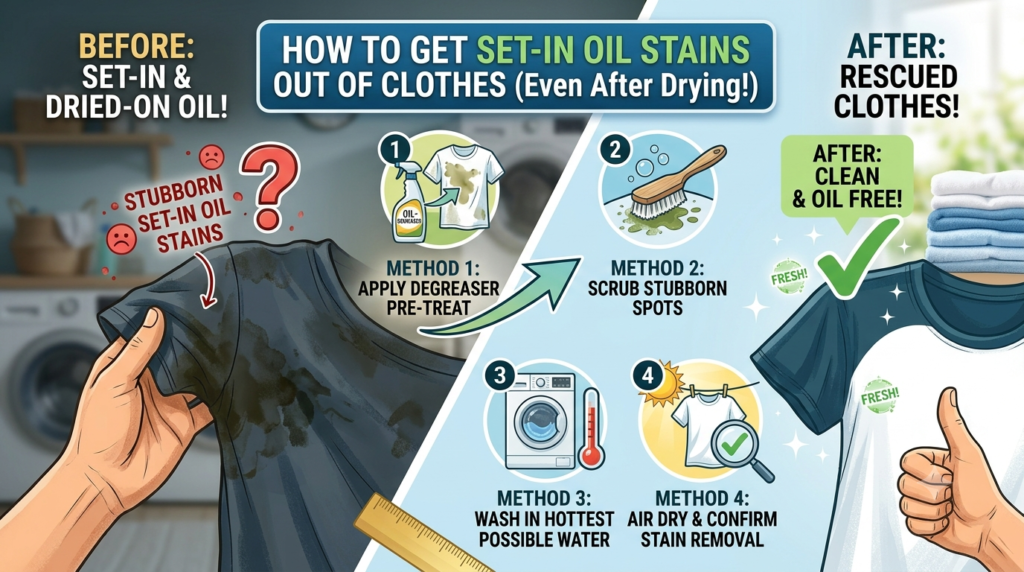
How to Get Set-In Oil Stains Out of Clothes (Even After Drying!)
It is a stomach-dropping moment we’ve all experienced: you’re folding a fresh load of laundry out of the dryer when you spot a dark, dull circle right on the chest of your favorite shirt. It’s an oil stain—maybe from a stray drop of salad dressing, a splash of cooking oil, or a bit of automotive grease.
Because the garment has already been through a full wash cycle and the high heat of the tumble dryer, conventional laundry wisdom says it’s ruined. High heat effectively bakes oil deep into synthetic and organic fibers, binding the lipids to the fabric matrix and making them semi-permanent.
But don’t throw it out just yet. While a dried oil stain is incredibly stubborn, it isn’t invincible. To get a set-in oil stain out of clothing after it has dried, you just need to understand the molecular chemistry of lipids and use a targeted strategy to re-liquefy the grease.
                       OIL STAIN EXTRACTION MATRIX

  PHASE               | COMPONENT          | CHEMICAL TARGET     | CORRECT AGENT
  --------------------|--------------------|---------------------|----------------------
  1. The Solvent      | WD-40 or Goof Off  | Re-liquefy / Reactivate| Hydrocarbon Solvent
  2. The Absorbent    | Baking Soda / Corn | Draw out / Lift     | Micro-porous Powder
  3. The Emulsifier   | Liquid Dish Soap   | Break lipid bonds   | Concentrated Surfactant
The Science of the “Set-In” Stain: Why Normal Wash Cycles Fail
To defeat a dried grease spot, you have to understand what you’re up against at a microscopic level.
Oil is hydrophobic—meaning it repels water. When liquid grease spills onto a shirt, it wraps around the individual yarn threads. If you toss it straight into a standard wash cycle, standard laundry detergents are often too diluted by the washing machine’s water volume to completely break apart those heavy oil molecules.
When that partially washed shirt hits the tumble dryer, the intense heat clears out any remaining moisture and causes the oily lipid chains to undergo a process similar to polymerisation. The oil hardens and fuses directly into the fabric’s pores.
To remove it after drying, you have to work backward: you must first reactivate and soften the dried fat molecules before you can lift them away.
The Reactivation Method: Step-by-Step
This advanced method relies on a surprising household tool—WD-40 (or a similar mild hydrocarbon solvent)—paired with heavy-duty dish soap.
A Note on Safety: The solvent acts as a targeted primer to break down the hardened polymer bonds of the old oil. Because it is highly concentrated, it softens the set-in stain instantly so the soap can do its job.
The Process
Place a flat piece of clean cardboard or a thick white plastic barrier inside the shirt directly underneath the stain. This prevents the oil from transferring to the back panel of the garment as you work on it.
Spray a small amount of WD-40 into a small bowl. Dip a cotton swab into the liquid and dab it directly onto the oil stain. You want to lightly saturate the dried spot without flooding the surrounding fabric. The fresh hydrocarbons will immediately bond with the old, baked-in oil, softening it back into a liquid state.
Sprinkle a generous layer of baking soda or cornstarch directly on top of the wet solvent. Use a soft toothbrush to scrub the powder firmly into the fabric. As you scrub, the powder will clump up—this is a visual sign that it is actively absorbing the newly liquefied oil and solvent out of the fibers. Brush away the clumps and repeat until the powder no longer shifts color.
Pour a generous drop of a high-quality, concentrated liquid dish soap (like blue Dawn) over the remaining powder residue. Use your toothbrush to work the soap into a rich lather. Dish soap contains ultra-powerful surfactants designed specifically to slice through kitchen grease and attach to water molecules. Let it sit for 5 to 10 minutes.
Flush the treated area under hot running water to wash away the emulsified soap and trapped grease particles. Immediately wash the item in your machine on the warmest cycle the garment’s care label allows.
Alternative Approach: The Powder-Only Method for Delicates
If you are dealing with a delicate garment like a thin poly-blend blouse or a lightweight knit sweater, you might want to avoid using heavy solvents. Instead, use an intensive heat-press abstraction:
-
The Method: Lay the garment flat, cover the set-in oil spot completely with a thick layer of cornstarch, and let it sit undisturbed for 24 to 48 hours.
-
The Heat Lift: Place a clean, plain brown paper bag over the powder-covered stain. Run a clothes iron on a low, dry setting (no steam) firmly over the paper bag for 30 seconds. The low external heat warms the hardened grease molecules, drawing them upward into the highly absorbent cornstarch and paper without scorching the underlying fabric.
Professional Textile Restoration for Pristine Wardrobes
Scrubbing, priming, and repeatedly checking treated garments under bright lights can turn laundry day into a stressful science experiment. When dealing with high-value business attire, delicate designer fabrics, or large piles of clothes damaged by a single cooking mishap, DIY methods carry a risk of color bleeding or fabric wear.
Outsourcing your premium wardrobe to a professional wash and fold laundry service ensures your clothes are treated with industrial-grade surface-active agents that isolate and lift deeply embedded organic residues without altering the fabric texture. For delicate garments like tailored silk blouses, structured wool suits, or formal wear that cannot tolerate a residential water wash, trusting an expert dry cleaners service is essential. Professional dry cleaning utilizes specialized, non-water solvents that effortlessly dissolve oils and greases without causing shrinkage or damaging fine finishes.
Industrial grease extraction is a vital operational requirement across many commercial sectors:
-
Boutique Airbnbs and Vacation Rentals: Guests frequently cook with oils and butter, leaving stubborn grease spots on expensive dining linens and decorative pillowcases. Utilizing a specialized airbnb laundry service provides heavy-duty stain treatment and sanitization protocols that preserve your textile investments and maintain perfect guest ratings.
-
Corporate, Medical, and Service Uniforms: Employees in the culinary, physical therapy, and automotive fields encounter grease every day. A reliable commercial laundry service manages high-volume uniform cleaning efficiently, maintaining a sharp, unified brand image for your business.
-
Fine Dining and Catering Establishments: Tablecloths and cloth napkins are constantly exposed to animal fats, cooking oils, and wine spills. A dedicated tablecloth and linen laundry service utilizes heavy steam presses and commercial lipid-cleaving enzymes to deliver flawless, crisp tablescapes that elevate the dining experience.
Conclusion
Finding a set-in oil stain after a run through the dryer can feel like a disaster, but it doesn’t have to be the end of the line for your clothing. By using a mild solvent to loosen the hardened lipid chains, drawing the residue out with an absorbent powder, and emulsifying what’s left with grease-cutting dish soap, you can restore your wardrobe to pristine condition.
If your laundry hampers are overflowing with tough stains and bulky loads, let the cleaning experts take care of it. Contact Bolt Laundry today to view our clear local pricing and schedule a quick, contactless door-to-door pickup.
