
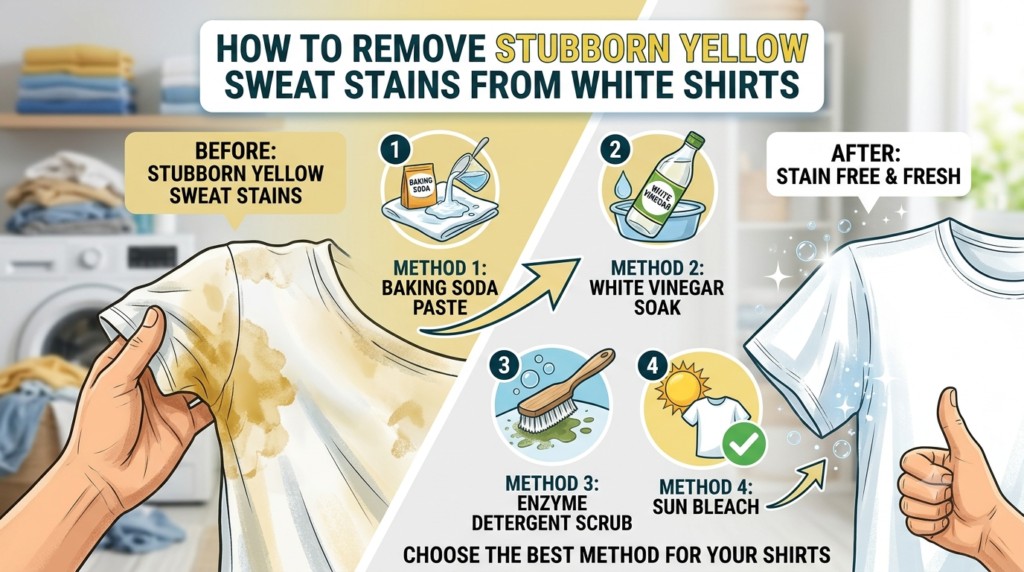
How to Remove Stubborn Yellow Sweat Stains From White Shirts
We have all been there: you pull your favorite, crisp white dress shirt or everyday cotton t-shirt out of the closet, only to find unsightly, dingy yellow rings discoloring the armpits and collar lines.
The immediate assumption is that these stains are simply caused by sweat. However, the true culprit is a bit more complex. Yellow armpit stains are actually the result of a chemical reaction between the organic proteins in your sweat and the aluminum compounds found in standard antiperspirants. When these elements fuse and bind to clothing fibers under body heat, they create a stubborn, crusty, water-repellent matrix that standard laundry cycles cannot wash away.
If you want to rescue your wardrobe from premature retirement and restore your whites to their brilliant original condition, you need to break that chemical bond. This science-backed guide details exactly how to remove stubborn yellow sweat stains from white shirts safely and effectively.
                     SWEAT STAIN DECONSTRUCTION MATRIX

  PHASE               | COMPONENT          | CHEMICAL TARGET     | CORRECT AGENT
  --------------------|--------------------|---------------------|----------------------
  1. The Binder       | Antiperspirant Wax | De-grease / Loosen  | Dish Soap (Dawn)
  2. The Pigment      | Organic Proteins   | Protein Cleaving    | Hydrogen Peroxide
  3. The Accelerator  | Mineral Buildup    | Lift & Deodorize    | Baking Soda
The Ultimate 3-Ingredient DIY Stain Obliterator
To lift a set-in, yellow aluminum-protein matrix, skip the supermarket spray bottles. The absolute most effective solution can be mixed right in your kitchen using three inexpensive ingredients: Hydrogen Peroxide, Baking Soda, and Liquid Dish Soap.
-
The Chemistry: Hydrogen peroxide ($H_2O_2$) acts as a color-safe, non-chlorine oxidizing bleach that breaks down the organic protein pigments. Baking soda (sodium bicarbonate) provides a gentle, abrasive scrubbing structure that lifts mineral crusting while eliminating odors. Liquid dish soap acts as a surfactant, slicing through the oily, waxy lipid barriers left behind by deodorants.
The Step-by-Step Method
-
Mix the Paste: In a small bowl, combine 1 part heavy-duty liquid dish soap, 2 parts hydrogen peroxide, and enough baking soda to form a thick, spreadable paste.
-
Apply and Work the Fibers: Lay your white shirt flat on a hard surface. Spread a generous layer of the paste directly over the yellowed underarm or collar areas. Use a soft-bristled toothbrush to work the mixture deep into the fabric weave using firm, circular motions.
-
Let it Marinate: Allow the paste to sit on the fabric for 30 to 60 minutes. For severe, hard, or heavily oxidized stains that have been through the dryer before, let it rest for up to 2 hours. Do not let it dry out completely.
-
Flush and Wash: Thoroughly flush the treated area under warm running water, rubbing the fabric against itself to release the trapped particles. Immediately toss the shirt into your washing machine and wash it on the warmest cycle permitted by the garment’s care label.
Warning: The Chlorine Bleach Trap: Never use liquid chlorine bleach on yellow sweat stains. Chlorine bleach interacts chemically with the organic proteins in sweat, oxidizing them and making the yellow discoloration significantly darker and permanently set into the fibers.
Alternative Solutions for Different Fabric Needs
If you don’t have peroxide on hand, or if you are treating a slightly different variant of a sweat stain, try these two alternative chemical flushes:
The White Vinegar Soak (Best for General Yellowing and Stiff Fabrics)
If an entire white shirt has taken on a dingy, greyish-yellow tint, it is likely due to overall mineral buildup from hard water mixed with body oils.
-
The Method: Submerge the entire shirt in a basin filled with 1 part distilled white vinegar to 4 parts warm water. Let it soak for 30 minutes. The acetic acid in the vinegar breaks down alkaline mineral deposits, softens stiff cotton fibers, and naturally brightens the white fabric matrix.
The Oxygen-Activated Boost (Best for Delicate Whites)
For thin, lightweight white tops that might not handle intense mechanical scrubbing with baking soda, choose an oxygen-activated soak.
-
The Method: Fill a basin with warm water and dissolve one scoop of a pure oxygen-based powder booster (like OxiClean). Submerge the shirt and allow it to soak for 4 to 6 hours (or overnight). Oxygen ions gently pull the pigment chains apart without degrading delicate fibers.
Professional Garment Management for Immaculate Whites
Tackling severe yellowing at home requires a significant amount of manual labor, precise mixing, and patience. For busy professionals, business owners, and active families, scrubbing armpit stains every single week simply isn’t an efficient use of time.
Outsourcing your premium everyday shirts to a professional wash and fold laundry service guarantees your wardrobe is processed using commercial-grade chemical auto-injection systems that isolate and eliminate organic buildup before it sets. For high-end tailored dress shirts, structured tuxedos, or delicate designer silks that cannot withstand a residential water cycle, trusting them to an expert dry cleaners service is vital. Professional dry cleaning methods dissolve oily antiperspirant waxes safely without causing fabric shrinkage or damaging the crisp lines of your cuffs and collars.
The demand for immaculate whites is even more pronounced across commercial industries:
-
Boutique Hospitality and Airbnbs: Guests expect flawless, bright white bed linens and bath towels. Lingering body oil discoloration instantly triggers poor reviews. Partnering with a specialized airbnb laundry service provides heavy-duty sanitization and brightening protocols that protect your textile investments.
-
Medical, Corporate, and Athletic Facilities: Managing soiled staff uniforms internally drains focus and productivity. Utilizing a reliable commercial laundry service maintains a pristine, highly professional brand image across your entire workforce.
-
Fine Dining and Catering: Sweat, food oils, and wine spills are constant threats in a bustling dining room. A professional tablecloth and linen laundry service relies on commercial steam presses and industrial stain extraction to deliver perfectly flat, brilliant white settings that elevate the overall dining experience.
Conclusion
Yellow sweat stains are a frustrating side effect of daily grooming, but they do not have to mean the end of your favorite white clothes. By targeting the aluminum-protein bond with the correct chemical counteragents, avoiding chlorine bleach, and verifying the stain is completely gone before tumble-drying, you can keep your white shirts looking bright, sharp, and brand new.
If your laundry baskets are overflowing with stained activewear and dull dress shirts, let the fabric experts handle the chemistry. Contact Bolt Laundry today to view our transparent pricing and schedule your first contactless, door-to-door laundry pickup.
