
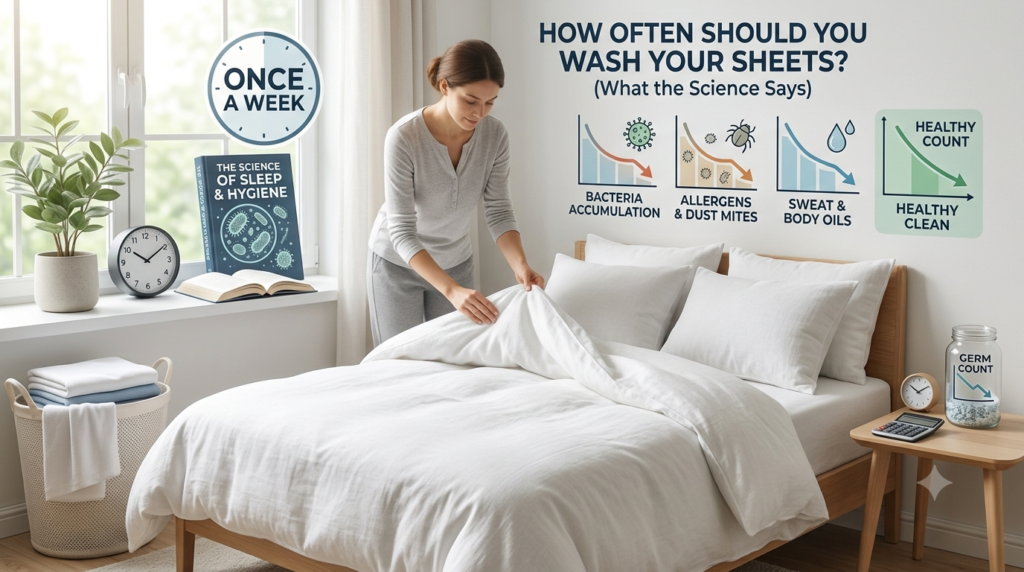
How Often Should You Wash Your Sheets? (What the Science Says)
We spend roughly a third of our lives tucked between our bedsheets. Because it is a passive, restful activity, it is easy to assume that our bedding stays relatively clean throughout the week.
However, beneath the surface of those crisp linens, a microscopic environment builds up rapidly every single night. The human body is constantly shedding biological material, generating moisture, and secreting oils as we sleep. When left unwashed, your bed becomes a thriving ecosystem for bacteria, fungi, and allergens.
To maintain optimal skin health, respiratory wellness, and sleep hygiene, you need to base your laundry schedule on biology rather than guesswork. Backed by microbiological data, this guide breaks down exactly how often you should wash your sheets and why it matters for your health.
                       BEDDING SANITIZATION TIMELINE

  FREQUENCY           | CRITERIA / CONDITIONS   | BIOLOGICAL REASON
  --------------------|-------------------------|---------------------------------
  Every 7 Days        | Standard Household      | Cuts off dust mite food supply
  Every 3 to 4 Days   | Allergies / Pets / Sweat| Controls bacterial accumulation
  Every 2 Weeks       | Guest Beds (Rare Use)   | Manages settling airborne dust
The Biology of an Unwashed Bed
To understand the recommended washing frequencies, we have to look at what accumulates in your bedding over a standard seven-day period.
-
Dead Skin Cells (Desquamation): Humans shed roughly 30,000 to 40,000 dead skin cells every single hour. Over an eight-hour sleep cycle, that amounts to hundreds of thousands of cells deposited directly into your mattress fibers.
-
The Dust Mite Ecosystem: Microscopic dust mites do not bite humans, but they feed exclusively on our shed dead skin cells. An unwashed sheet provides an all-you-can-eat buffet. The real health issue stems from their microscopic waste products, which contain powerful proteins that trigger chronic nighttime allergies, nasal congestion, and asthma flare-ups.
-
Microbial Growth: Every night, the body releases moisture (sweat) and sebum (skin oils). This warm, damp environment is a perfect incubator for bacteria and fungi. Studies have found that after just one week, pillowcases and sheets can harbor millions of colony-forming units of bacteria—including strains like Staphylococcus and Pseudomonas.
The Scientific Consensus: Once a Week
Microbiologists and sleep experts universally agree on a baseline rule: You should wash your bed sheets at least once every single week.
Washing your sheets on a strict seven-day cycle disrupts the reproductive timeline of dust mites and strips away the accumulated organic matter before bacteria can reach high concentrations.
Critical Exceptions: When to Wash Every 3 to 4 Days
While once a week works beautifully for the average individual, certain lifestyle variables require you to double your washing frequency to twice a week:
-
You Have Seasonal Allergies or Asthma: Airborne pollen, dust, and environmental dander cling to your hair and clothes, transferring straight to your pillowcase at night. Frequent washing keeps your respiratory pathway clear of irritants.
-
Your Pets Sleep in Your Bed: Dogs and cats introduce more than just fur; they bring outdoor microbes, dander, and microscopic traces of waste directly onto your sleeping surface.
-
You Experience Night Sweats or Acne: If you sweat heavily during the night or are prone to breakouts, the oils trapped on your sheets will re-clog your skin pores night after night, worsening acne breakouts and creating stale, stubborn odors.
-
You Sleep in the Nude: Without the barrier of pajamas, your skin oils, sweat, and biological shed are deposited directly into the fabric matrix at an accelerated rate.
The Correct Science-Backed Washing Protocol
Simply tossing your sheets into a quick wash cycle won’t fully eliminate the microscopic threats embedded in the fibers. To properly sanitize your bedding, use a strict temperature and drying strategy:
-
Turn Up the Heat: To effectively kill dust mites and dissolve body oils, wash your bedding using a water temperature of at least 140°F (60°C). Always consult the care label on high-end Egyptian cotton or linen sheets first, but favor the warmest setting the fabric can safely handle.
-
Choose the Right Cleanser: Utilize a heavy-duty, enzyme-based liquid detergent. Enzymes are essential because they actively slice through the lipid (oil) and protein chains found in human sebum and sweat.
-
Dry Completely: Tumble dry your sheets on a warm setting or hang them in direct, bright sunlight. The ultraviolet (UV) rays from the sun act as a natural, potent disinfectant. Never fold or store sheets that are even slightly damp, as trapped moisture inside a dark linen closet triggers instant mildew growth.
Professional Textile Care for the Ultimate Deep Clean
Maintaining a meticulous, high-temperature sanitization schedule for multiple bedrooms in a busy household is an exhaustive, time-consuming operation. Large bedding sets consume massive amounts of washing machine space, take hours to dry thoroughly, and require significant physical effort to fold neatly.
Outsourcing your household linens to a premium wash and fold laundry service guarantees that your sheets receive commercial-grade thermal and chemical sanitization, removing 99.9% of biological allergens while returning them perfectly crisp, flat-folded, and ready to transform your bed. For luxury, fragile bedding assets—such as heavy down-filled comforters, delicate silk sheets, or tailored wool blankets that cannot tolerate residential water agitation—trusting them to an expert dry cleaners service preserves their loft, insulating properties, and delicate textures for years to come.
The operational demand for impeccably clean bedding is even more intense across the commercial sector:
-
Vacation Rentals and Airbnbs: A host’s business reputation depends entirely on the cleanliness of their beds. Lingering odors, hair, or dull coloration on sheets results in devastating guest reviews. Utilizing a dedicated airbnb laundry service provides automated, high-volume processing that meets strict hospital-grade cleanliness standards within tight check-in windows.
-
Medical and Hospitality Environments: For outpatient clinics, physical therapy studios, and wellness centers, managing contaminated linens internally places a massive strain on labor. Utilizing an expert commercial laundry service ensures total regulatory compliance, lower utility overhead, and consistent fabric sanitation.
-
Fine Culinary Venues: Just as clean beds define hospitality, pristine textiles define luxury dining. Food greases, wax, and oils require deep chemical extraction. A specialized tablecloth and linen laundry service relies on heavy industrial steam presses to remove stubborn organic residue, returning immaculate linen displays that elevate your customer-facing environment.
Conclusion
Washing your sheets isn’t just about aesthetic freshness or removing visible wrinkles—it is a critical requirement for basic cellular and respiratory hygiene. By sticking to a firm weekly washing schedule, using warm water, and accounting for personal variables like allergies or pets, you can protect your health and enjoy a truly clean, restorative night of sleep.
If you are tired of wrestling with bulky fitted sheets and endless drying cycles every weekend, let the professionals handle the heavy lifting. Contact Bolt Laundry today to view our simple local pricing and schedule a convenient, contactless door-to-door pickup.
