
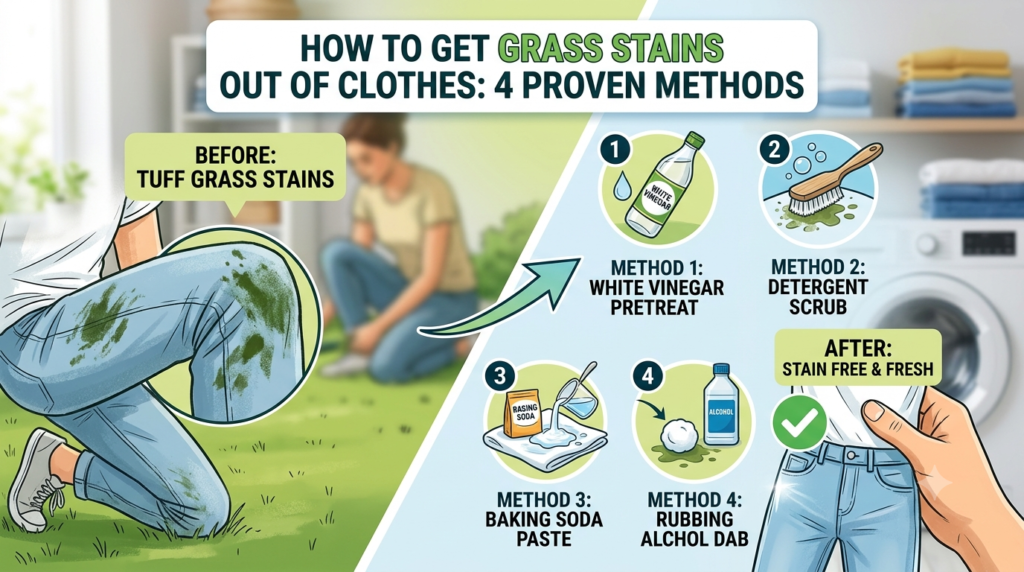
How to Get Grass Stains Out of Clothes: 4 Proven Methods
Whether it’s from a weekend soccer game, an afternoon working in the yard, or a casual picnic in the park, grass stains are a rite of passage for an active wardrobe. Unfortunately, they are also notorious for being some of the most stubborn marks to eliminate.
The bright green streak left behind by grass isn’t just surface-level mud—it is a complex biological bond. Grass stains are made up of chlorophyll (the natural green pigment in plants) mixed with plant proteins and xanthophylls. Because chlorophyll is structurally highly similar to the natural dyes used to color fabric fibers, it acts as a permanent dye when pressed into cotton, denim, or polyester.
Tossing a fresh grass stain directly into a standard, cold-water wash cycle will rarely break that structural bond. To rescue your garments, you have to use targeted solvents to dissolve the plant pigments. If you want to keep your wardrobe looking immaculate, these 4 proven, science-backed methods will show you exactly how to get grass stains out of clothes safely.
                       GRASS STAIN REMOVAL MATRIX

  METHOD            | BEST FOR              | KEY INGREDIENT      | ACTION ACTION
  ------------------|-----------------------|---------------------|----------------------
  1. The Solvent    | Stubborn / Dried-In   | Isopropyl Alcohol   | Breaks pigment bonds
  2. The Enzyme     | Everyday Activewear   | Heavy-Duty Liquid   | Digests plant proteins
  3. The Oxygen     | Deep Friction Stains  | OxiClean Soak       | Lifts embedded dye
  4. The Peroxide   | Crisp White Fabrics   | 3% Peroxide + Dawn  | Color-safe whitening
Method 1: The Rubbing Alcohol Solvent Flush (Best for Dried or Stubborn Stains)
Because chlorophyll is an organic compound that is fat-soluble rather than water-soluble, traditional water and soap struggle to lift it alone. Isopropyl alcohol acts as a powerful, fabric-safe solvent that disrupts the chlorophyll-fiber bond at a molecular level.
-
Step 1: Lay the garment flat and dab 70% isopropyl rubbing alcohol directly onto the green mark using a clean white cloth or cotton pad.
-
Step 2: Blot firmly from the outside edges of the stain working inward. This prevents the liquefied green dye from spreading outward into clean fabric threads.
-
Step 3: Let it sit for 3 to 5 minutes. Do not let it dry completely. Rinse the area thoroughly under cold running water, pushing the water through the back of the fabric to flush out the pigments.
Method 2: The Enzyme Lift (Best for Everyday Casual Clothes)
If you don’t have rubbing alcohol on hand, your everyday premium laundry detergent can do the heavy lifting—provided it contains the right active biology. You need an enzyme-based liquid laundry detergent. Enzymes like protease and amylase are designed to physically digest the organic plant proteins that bind the grass stain to the fabric.
-
Step 1: Pour a small amount of heavy-duty liquid detergent directly over the entire grass stain.
-
Step 2: Use a soft-bristled toothbrush to gently work the detergent into the fibers using circular motions.
-
Step 3: Let the solution rest on the fabric for 15 to 20 minutes to allow the enzymes to break down the cellular walls of the plant stain. Rinse with cold water before washing on your standard cycle.
Method 3: The Oxygen-Based Bleach Soak (Best for Deep Sports Friction Stains)
When a child slides into home base or you fall while trail running, the grass pigment is mechanically driven deep into the core of the fabric weave. For these deep, high-friction stains, an oxygen-activated soak is the ultimate remedy.
-
Step 1: Fill a basin or clean sink with warm water and mix in one scoop of an oxygen-based powdered booster (such as OxiClean). Unlike harsh chlorine bleach, oxygen bleach uses oxygen ions to break apart pigment chains without stripping garment dyes.
-
Step 2: Submerge the entire clothing item and let it soak for 1 to 2 hours. For old, set-in, or severe grass stains on durable sports uniforms, let it soak overnight.
-
Step 3: Remove the item from the basin, inspect the spot, and transfer it into your washing machine.
Method 4: The Peroxide and Dish Soap Blend (Best for Pure White Clothes)
Grass stains on white canvas sneakers, white denim jeans, or white cotton t-shirts can feel terminal. For white fabrics only, a DIY chemical combination of hydrogen peroxide and specialized degreasing dish soap creates an unbeatable stain-lifting reaction.
-
Step 1: Mix 3 parts standard 3% hydrogen peroxide with 1 part concentrated blue dish soap in a small bowl.
-
Step 2: Apply the mixture directly to the grass stain. The hydrogen peroxide acts as a mild, non-destructive bleaching agent, while the dish soap breaks down surface oils.
-
Step 3: Allow it to sit for 20 to 30 minutes, gently scrub with a clean cloth, and flush thoroughly with cold water.
The Golden Rule of Stain Removal: Always inspect the garment before tossing it into the dryer. The intense, concentrated heat of a residential clothes dryer will instantly cook any remaining plant proteins, permanently locking the pigment into the fabric. If a shadow of the green stain remains after washing, repeat your chosen treatment method while the item is still damp.
Professional Garment Solutions for Heavy Loads
Successfully treating complex organic marks like grass, mud, and sweat requires a serious investment of time, patient blotting, and specific chemical counteragents. For busy families, sports coaches, and working professionals, managing these tedious stain-removal protocols at home can turn a relaxing weekend into an exhausting chore.
Outsourcing your household apparel to a professional wash and fold laundry service ensures your everyday garments are sorted, treated, and cleaned by fabric experts using commercial-grade stain-lifting technology. For your high-value luxury items, delicate summer dresses, or structured tailored blazers that can’t handle a standard mechanical wash cycle, trusting them to an expert dry cleaners service guarantees that stubborn organic pigments are extracted safely without risking fabric shrinkage or dye bleeding.
The stakes are equally high for commercial enterprises throughout our service regions. If you manage an upscale vacation rental or a boutique hospitality venue, your brand reputation hinges on keeping linens pristine. A stray grass stain from an outdoor guest activity can ruin your textile investment if processed incorrectly. Partnering with a dedicated airbnb laundry service provides total peace of mind, delivering advanced chemical auto-injection systems that sanitize and restore sheets and blankets to a spotless state.
For heavy-volume commercial entities, corporate operations, and local athletic facilities, handling laundry internally can quickly drain valuable staff productivity. Utilizing a comprehensive commercial laundry service streamlines your operational logistics while reducing overhead. Furthermore, for fine dining establishments and event venues where outdoor seating often exposes high-end fabrics to outdoor elements, utilizing a premium tablecloth and linen laundry service guarantees that all your customer-facing fabric assets look perfectly crisp, vibrant, and completely stain-free.
Conclusion
By understanding the underlying fabric science of chlorophyll, acting quickly while the mark is fresh, and selecting the perfect counteragent from these 4 proven methods, you can confidently protect your favorite clothes from permanent green discoloration.
If your active family generates a mountain of stained uniforms and messy laundry baskets that you don’t have the time to tackle, let the professionals lift the burden. Contact Bolt Laundry today to learn more about our advanced fabric care solutions or to schedule your first convenient, contactless door-to-door pickup.
