
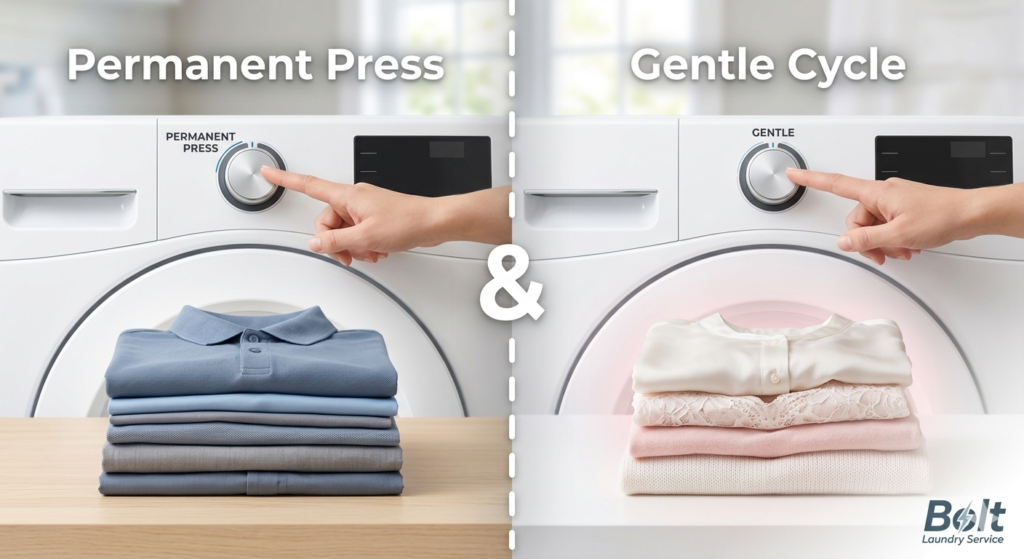
Permanent Press vs. Gentle Cycle: When to Use Each Setting
Have you ever stood in front of your washing machine, clutching a favorite synthetic blend shirt or a delicate lace blouse, wondering which button will keep it looking new and which will ruin it forever? Most modern machines offer a dizzying array of options, but two of the most misunderstood are the permanent press and gentle cycles. Choosing incorrectly isn’t just a minor mistake; it can lead to stubborn wrinkles, frayed fibers, or even permanent heat damage.
In this guide, you will learn the mechanical differences between these two cycles, the science of how they affect your clothes, and exactly which fabrics belong in each. By understanding the permanent press vs gentle cycle debate, you can stop guessing on laundry day and start extending the lifespan of your wardrobe.
What is the Permanent Press Cycle?
The permanent press cycle was designed specifically for the mid-20th-century surge in synthetic fabrics like polyester and nylon. These fabrics were marketed as “permanent press” because they were treated to resist wrinkles. However, these same fibers are heat-sensitive and prone to “setting” wrinkles if they are washed or spun too aggressively.
The permanent press cycle uses warm water for washing and cool water for rinsing. The warm water helps loosen existing wrinkles and break down body oils, while the cool rinse “sets” the fabric so new wrinkles don’t form during the spin. Mechanically, it uses a fast wash action followed by a slow spin. This ensures the clothes get clean but aren’t pressed so hard against the side of the drum that creases become permanent.
What is the Gentle Cycle?
While permanent press is about wrinkle prevention, the gentle cycle (also called the delicate cycle) is about fiber protection. This cycle is designed for garments that are physically fragile—think silk, lace, sequins, or loosely woven knits.
The gentle cycle typically uses cold water and features a significantly shorter wash time. The “agitation” (the way the machine moves the clothes) is much slower and less frequent. The spin cycle is also slow, leaving more water in the clothes to prevent the high-velocity friction that causes pilling and tearing. If you are washing something that looks like it could easily snag or lose its shape, the gentle cycle is your safest bet.
Permanent Press vs Gentle Cycle: Key Differences
Understanding the mechanics helps you choose the right setting for the right job. Here is a breakdown of how they compare:
-
Agitation Speed: Permanent press uses a fast/regular wash speed but a slow spin. Gentle uses a slow wash speed and a slow spin.
-
Water Temperature: Permanent press defaults to warm water (to relax wrinkles). Gentle defaults to cold water (to protect delicate fibers and dyes).
-
Cycle Duration: Permanent press is usually a medium-length cycle. Gentle is the shortest cycle on your machine to minimize the time clothes spend rubbing against each other.
-
Goal: The goal of permanent press is “ready-to-wear” clothes with minimal ironing. The goal of the gentle cycle is “fiber preservation.”
Which Fabrics Belong in Each Cycle?
Choosing the wrong cycle can lead to “mechanical damage,” which is the physical breaking of fibers. Follow this guide to keep your clothes in top shape:
Use the Permanent Press Cycle for:
-
Synthetic Blends: Polyester, nylon, and acrylic.
-
Office Wear: Dress shirts and slacks made from wrinkle-resistant materials.
-
Knits: Most jersey-knit t-shirts thrive here as it prevents the “bacon collar” effect.
-
Natural/Synthetic Mixes: Poly-cotton blends.
Use the Gentle Cycle for:
-
Intimates: Lingerie, lace, and bras (though a mesh bag is still recommended).
-
Luxury Fabrics: Silk, satin, and high-end wool or cashmere.
-
Embellished Items: Anything with beads, sequins, or delicate embroidery.
-
Loose Weaves: Sweaters that might stretch or snag in a standard cycle.
Common Laundry Mistakes to Avoid
Even if you choose the right cycle, these three mistakes can undo all your hard work:
-
Overloading the Machine: When you cram too many clothes into a permanent press cycle, they don’t have enough room to “relax.” This leads to the very wrinkles the cycle was designed to prevent.
-
Using Too Much Detergent: Excessive suds act as a lubricant that prevents clothes from rubbing against each other enough to get clean, but more importantly, the residue can trap bacteria in delicate fibers.
-
Mixing Heavy and Light Items: Never wash a heavy denim jacket on a gentle cycle with a silk scarf. The weight of the denim will act like sandpaper against the delicate silk, regardless of how slow the machine moves.
Professional Care for Your Wardrobe
Mastering the nuances of machine settings takes time and attention to detail. For many busy professionals and families, the risk of a laundry mishap is simply too high for an expensive wardrobe. This is why many choose a wash and fold laundry service. Professional cleaners sort every item by fabric type and weight, ensuring that your synthetics get the permanent press treatment they need and your delicates are handled with the care they deserve.
For business owners, the stakes are even higher. Uniforms and linens represent a significant investment. Utilizing a commercial laundry service ensures that your business materials are processed using industrial-grade settings that maximize the life of the fabric, saving you money on replacement costs over time.
Conclusion
The permanent press vs gentle cycle debate shouldn’t be a source of stress on laundry day. By remembering that permanent press is for “wrinkle-free synthetics” and the gentle cycle is for “fragile delicates,” you can protect your clothing investment and keep your wardrobe looking sharp.
A little bit of knowledge about how your machine works goes a long way. However, if you find yourself staring at a care label that seems like a different language, or if your “to-do” list is already too long, don’t hesitate to let the experts handle it. Proper care today means your favorite clothes will be around for years to come.
