
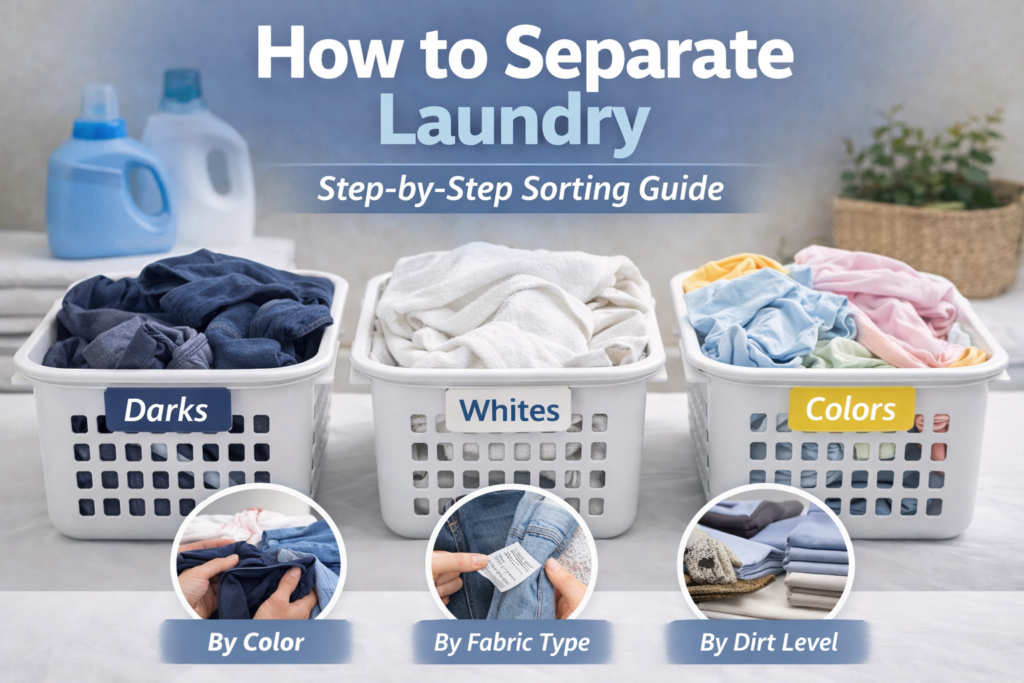
How to Separate Laundry: The Complete Guide to Sorting Clothes Properly
Separating laundry is one of the most important steps in washing clothes correctly. While it may seem like a small step, knowing how to separate laundry properly can prevent color bleeding, fabric damage, shrinking, and clothing wear. It is also an important part of learning how to do laundry properly.
Many people simply throw all their clothes into one load, but this can lead to faded colors, ruined fabrics, and clothes that don’t get properly cleaned. Taking just a few minutes to sort your laundry correctly can help extend the life of your clothing and keep everything looking its best.
In this guide, we’ll explain how to separate laundry step-by-step, including the most important categories to sort and helpful laundry tips for better results.
Why Separating Laundry Is Important
Sorting your laundry may feel like an extra chore, but it plays a major role in protecting your clothing.
When laundry isn’t separated correctly, several problems can occur:
-
Dark colors bleeding onto lighter fabrics
-
Whites becoming dull or gray
-
Delicate fabrics getting damaged
-
Heavy fabrics damaging lighter items
-
Clothes not being cleaned properly
Separating laundry ensures that your clothing receives the proper washing conditions for the best cleaning results.
Step 1: Separate Laundry by Color
The most common way to separate laundry is by color. Dyes from darker clothing can bleed during washing, especially in warm or hot water. According to laundry experts, separating clothes by color is one of the most important steps to prevent dye transfer.
White Clothing
White clothing should always be washed separately from colored items.
Examples include:
-
White shirts
-
Socks
-
Towels
-
Bedding
-
Undergarments
Keeping whites separate helps prevent them from turning gray or absorbing dyes from darker fabrics.
Dark Colors
Dark colors include items such as:
-
Black clothing
-
Dark blue jeans
-
Dark gray garments
-
Deep reds or purples
Washing dark clothes together prevents color bleeding onto lighter fabrics.
Cold water is usually best for dark clothing to preserve the color.
Light Colors
Light-colored clothing includes items such as:
-
Light blue shirts
-
Pastel clothing
-
Light gray garments
-
Soft pinks and yellows
These items can typically be washed together safely without transferring dye.
Step 2: Separate Laundry by Fabric Type
In addition to color, fabric type also matters when separating laundry.
Different fabrics require different wash cycles and drying temperatures.
Heavy Fabrics
Heavy fabrics include items like:
-
Towels
-
Jeans
-
Hoodies
-
Sweatpants
-
Bedding
These items are thicker and require stronger wash cycles.
Washing heavy fabrics with delicate items can cause damage.
Lightweight Fabrics
Lightweight fabrics include:
-
T-shirts
-
Blouses
-
Athletic wear
-
Lightweight cotton clothing
These items typically wash well on normal cycles.
Delicate Fabrics
Delicate fabrics require special care.
Examples include:
-
Silk
-
Lace
-
Lingerie
-
Thin synthetic fabrics
These items should be washed on delicate cycles or placed in laundry bags to prevent damage.
Step 3: Separate Laundry by Level of Dirt
Another helpful way to sort laundry is by how dirty the items are.
Heavily soiled clothing should be washed separately from lightly worn garments.
Heavily Soiled Items
Examples include:
-
Work clothes
-
Gardening clothes
-
Sports uniforms
-
Children’s outdoor clothing
These items may require heavy-duty wash cycles and warm or hot water.
Lightly Soiled Clothing
Examples include:
-
Office clothing
-
Casual wear
-
Lightly worn garments
These items usually wash well with standard cycles.
Separating heavily soiled clothing prevents dirt from spreading to cleaner items.
Step 4: Separate Laundry by Lint Production
Certain fabrics produce lint while others attract lint.
High Lint Items
Examples include:
-
Towels
-
Fleece
-
Flannel
Lint Attracting Fabrics
Examples include:
-
Corduroy
-
Synthetic fabrics
-
Dark clothing
Keeping lint producers separate from lint collectors helps maintain the appearance of clothing.
Step 5: Separate Laundry by Special Care Instructions
Some items require specific washing conditions.
Examples include:
-
Wool sweaters
-
Athletic performance clothing
-
Waterproof fabrics
-
Dry-clean-only garments
Always check clothing labels to determine the proper washing method.
Helpful Laundry Sorting Tips
Here are a few simple tips to make separating laundry easier.
Use Multiple Laundry Baskets
Once laundry is finished, learning how to fold a fitted sheet properly can also help keep your linen closet organized.
When the basket fills up, the clothes are already sorted.
Wash New Clothes Separately
New clothes sometimes release excess dye during the first few washes.
Washing them separately prevents dye from staining other garments.
Turn Dark Clothes Inside Out
Turning dark clothing inside out before washing helps protect the outer fabric and preserve color.
Zip Zippers and Button Buttons
Closing zippers and buttons prevents clothing from snagging other items during washing.
Common Laundry Sorting Mistakes
Even experienced laundry users sometimes make simple mistakes.
Avoid these common errors:
-
Mixing whites with dark clothing
-
Washing towels with delicate fabrics
-
Ignoring clothing care labels
-
Overloading the washing machine
-
Washing heavily soiled clothes with lightly worn items
Correcting these mistakes can significantly improve laundry results.
When Laundry Becomes Too Time-Consuming
While learning how to separate laundry properly can improve your laundry routine, it can also take time and effort.
For busy households, laundry can quickly become a never-ending chore.
That’s why many people choose a wash and fold laundry pickup and delivery service to handle washing, drying, folding, and sorting professionally.
Professional laundry services ensure that clothing is properly separated, cleaned, and returned neatly folded.
Final Thoughts
Separating laundry correctly is one of the simplest ways to protect your clothes and improve washing results.
By sorting clothing by color, fabric type, dirt level, lint production, and care instructions, you can prevent damage and keep your clothing looking its best.
Taking a few extra minutes to separate laundry properly can make a major difference in how clean your clothes come out and how long they last.
Whether you do your laundry at home or use a professional wash and fold laundry service, understanding the basics of how to separate laundry will help you keep your wardrobe fresh, organized, and well cared for.
