
Dry Cleaning vs. Laundry: Which One Does Your Wardrobe Actually Need?
When it comes to caring for your clothes, most people assume that “clean is clean.” However, using the wrong method for a specific fabric can be the difference between a garment that lasts a decade and one that is ruined in a single afternoon. If you’ve ever wondered about the real difference between dry cleaning vs laundry, you aren’t alone.
In this guide, we will break down the science of both methods, explain why “Dry Clean Only” tags are sometimes a warning and sometimes a suggestion, and provide a definitive list of which items belong in a washing machine and which require professional solvent care. By the end of this article, you will have the knowledge to protect your clothing investment and keep your wardrobe looking brand new.
What is the Real Difference Between Dry Cleaning and Laundry?
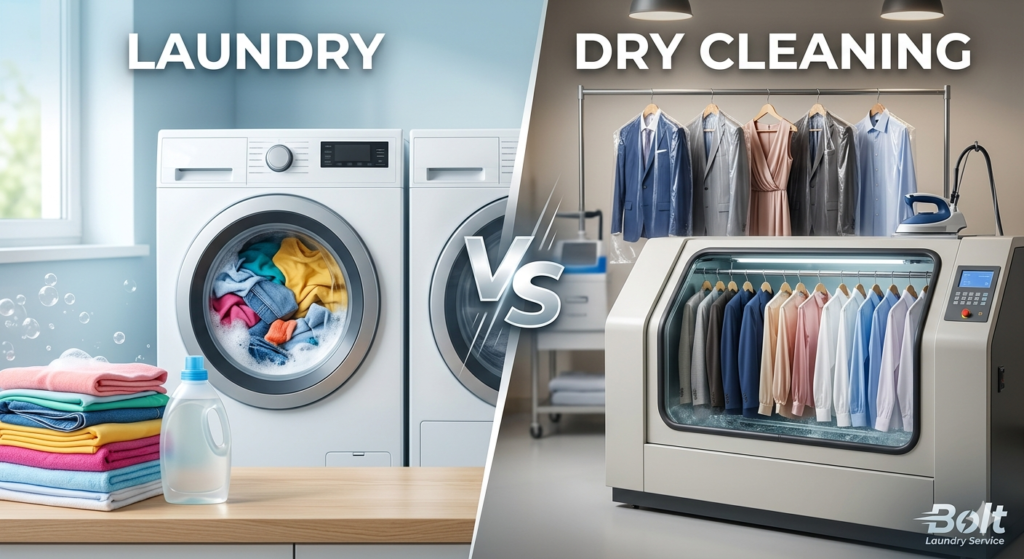
The most significant difference between dry cleaning and laundry is the use of water.
Laundry is the traditional method we all know. It uses water, specialized detergents, and mechanical agitation to lift dirt and oils from the fabric. It is highly effective for organic stains (like sweat and food) and is the best way to get that “fresh” scent we associate with clean clothes.
Dry cleaning, despite the name, is not actually “dry.” Instead of water, your clothes are immersed in a liquid chemical solvent. Because these solvents contain little to no water, they do not penetrate the fibers in the same way. This prevents the fibers from swelling, stretching, or shrinking—making it the essential choice for fabrics that react poorly to H2O.
The Science of Dry Cleaning: Why It Works
Some fabrics are “hydrophilic,” meaning they love water. When fibers like wool or silk get wet, they expand. When they dry, they contract—often unevenly. This is what causes the dreaded “shrunk sweater” or the loss of a suit jacket’s structured shape.
Dry cleaning solvents are “lipophilic,” meaning they are attracted to fats and oils. This makes dry cleaning the undisputed champion at removing:
-
Grease and oil-based stains (like salad dressing or motor oil).
-
Deep-seated waxes.
-
Body oils that have bonded to delicate fibers.
Because the solvent evaporates much more quickly than water and doesn’t “soak” the fiber’s core, the garment maintains its original “off-the-rack” dimensions.
When to Choose Laundry (Wash and Fold)
For your everyday wardrobe, professional laundry is often superior to dry cleaning. Modern wash and fold laundry service uses advanced temperature controls and high-quality detergents that are tougher on odors than dry cleaning solvents.
Best for Laundry:
-
Cotton and Synthetics: T-shirts, jeans, socks, and undergarments.
-
Bedding: Sheets and pillowcases benefit from the high-temperature sanitization that water provides.
-
Athletic Wear: Spandex and polyester blends need water-based detergents to strip away the bacteria that cause “gym smell.”
When to Choose Dry Cleaning
Certain items should never see the inside of a standard washing machine. If a garment has a complex internal structure (like the padding in a blazer) or is made of animal-based fibers, dry cleaning is the only safe path.
Best for Dry Cleaning:
-
Suits and Blazers: Water can destroy the internal “interlining” that gives a suit its shape.
-
Silk and Rayon: These fabrics often lose their luster or shrink significantly in water.
-
Professional Outerwear: Wool coats and heavy overcoats.
-
Pleated Items: Dry cleaners use specialized presses to “re-set” pleats that water would wash away.
Decoding the “Dry Clean Only” Tag
One of the biggest points of confusion in garment care is the care label. Here is the professional secret:
-
“Dry Clean Only”: Take this literally. The manufacturer has tested the fabric and determined that water will cause structural damage, color bleeding, or significant shrinkage.
-
“Dry Clean”: This is often a suggestion. It means that dry cleaning is the preferred method, but a skilled professional might be able to hand-wash the item safely.
If you are ever in doubt, it is always safer to default to professional care. A single mistake with a high-end item can be much more expensive than a trip to the cleaner.
Common Mistakes in Garment Care
The most common mistake people make is waiting too long to clean an item. Whether it’s a suit or a favorite cotton dress, stains that are left to “set” for weeks become much harder to remove, even with professional solvents.
Another mistake is treating a “dry clean” stain with water at home. If you spill wine on a silk tie and try to dab it with a wet napkin, you may create a permanent “water ring” that even a dry cleaner cannot remove. If a delicate item gets stained, leave it alone and get it to a professional as soon as possible.
Professional Solutions for a National Audience
Maintaining a diverse wardrobe requires a mix of both laundry and dry cleaning expertise. For the average person, sorting these items and managing different pickup schedules is a major time sink. This is why many families transition to a wash and fold laundry service for their weekly needs, ensuring their everyday cottons are crisp and sanitized.
For businesses, the choice is even clearer. When managing uniforms or linens, the longevity of the fabric is the highest priority. A commercial laundry service understands the specific chemistry required to keep commercial-grade fabrics looking professional load after load, saving the business thousands in replacement costs.
Conclusion
The choice between dry cleaning vs laundry ultimately comes down to the fiber and the finish of your clothes. Laundry is best for your “close-to-skin” items that need deep sanitization and odor removal. Dry cleaning is a specialized preservation method for delicate fibers and structured garments that cannot handle the “stress” of water.
By understanding these two distinct worlds of cleaning, you can make smarter decisions at the care label and ensure your favorite pieces stay in your rotation for years. Whether you are doing it yourself or trusting the experts at Bolt Laundry, proper care is the ultimate fashion statement.
