
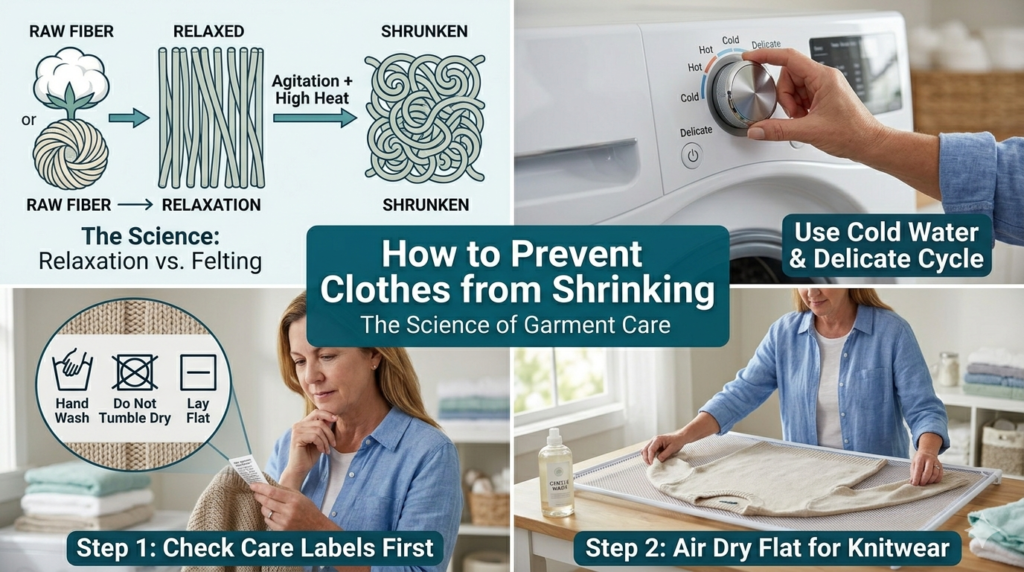
How to Prevent Clothes from Shrinking: The Science of Garment Care
There are few feelings in household management quite as frustrating as pulling your favorite cotton t-shirt or an expensive wool sweater out of the dryer only to realize it has shrunk two sizes. It is a mistake that feels irreversible, usually resulting in a garment that is either forced onto a younger sibling or thrown into the donation bin.
Many people assume that shrinking is just a random hazard of using a washer and dryer. However, garment shrinkage is actually a predictable chemical and physical reaction to heat, moisture, and mechanical agitation.
If you want to protect your wardrobe investments and stop guessing which dial settings are safe, this guide is for you. Below, we break down the science of why clothes shrink and provide a foolproof blueprint to keep your wardrobe fitting perfectly for years.
The Three Types of Garment Shrinkage
To stop clothes from shrinking, you first have to understand that not all shrinkage happens the same way. In the textile industry, shrinkage is categorized into three distinct types:
1. Relaxation Shrinkage
This occurs primarily in natural fibers like cotton, linen, and silk. When manufacturers weave these fibers into fabric, the threads are pulled tightly and placed under immense tension. The moment those fibers are exposed to water and ambient moisture for the first time, the tension relaxes. The fibers swell, absorb the liquid, and snap back to their natural, shorter length.
2. Felting Shrinkage
This applies almost exclusively to animal-hair fibers, such as wool, cashmere, and mohair. Under a microscope, a strand of wool is not smooth; it is covered in tiny, overlapping scales. When exposed to the combination of hot water, moisture, and the structural friction of a washing machine agitator, these scales open up and interlock like velcro. Once they lock together, the garment compresses significantly and permanently.
3. Consolidation Shrinkage
This is the most common culprit behind ruined clothes and is caused entirely by the excessive heat and agitation of a standard clothes dryer. The tumbling mechanical motion, combined with intense heat, forces the loosely woven loops of the fabric to tightly compress and bind together, shrinking the garment’s dimensions.
                       GARMENT SHRINKAGE RISK MATRIX

  FABRIC TYPE    | SHRINKAGE RISK | PRIMARY TRIGGER     | BEST WASH METHOD
  ---------------|----------------|---------------------|------------------
  Wool/Cashmere  | EXTREMELY HIGH | Heat & Agitation    | Hand Wash / Dry Clean
  100% Cotton    | HIGH           | High Dryer Heat     | Cold Wash / Air Dry
  Linen & Silk   | MEDIUM         | Moisture Relaxation | Gentle / Hang Dry
  Synthetics     | LOW            | Extreme Heat Only   | Low Temp / Tumble
Step-by-Step: How to Prevent Your Clothes from Shrinking
You don’t have to resign yourself to a wardrobe of shrinking clothes. By altering a few basic steps in your laundry routine, you can mitigate almost all shrinkage risks:
Step 1: Always Read the Care Labels Literal
The manufacturer has chemically tested the fabric matrix of your clothes. If a label reads “Dry Clean Only,” it means the structural integrity of the weave cannot handle water exposure without triggering relaxation or felting shrinkage. Trust the tag.
Step 2: Default to Cold Water
High temperatures loosen fabric bonds, making them highly susceptible to warping. Washing your clothes in cold water keeps the fibers structurally stable and rigid, significantly lowering the risk of relaxation shrinkage. As an added benefit, cold water preserves fabric dyes and cuts down your home utility costs.
Step 3: Invest in a Air-Drying Rack
The dryer is the single most dangerous appliance in your laundry room when it comes to garment longevity. For jeans, high-end t-shirts, athletic wear, and delicate blouses, skip the machine entirely. Shake the garments out to remove excess wrinkles when they are wet, and lay them flat or hang them on a dedicated drying rack in a well-ventilated space.
Step 4: Use Low Heat and Timed Drying
If you must use a dryer for your cottons, turn the dial away from the “High Heat” or “Cottons” setting. Use the “Low Heat” or “Delicate” option instead. More importantly, utilize a timed dry setting to avoid over-drying. Running clothes through a heat cycle when they are already dry strips the residual moisture from the core of the fibers, causing instant consolidation shrinkage.
Can You “Unshrink” a Garment?
If a garment has suffered severe felting shrinkage (like a wool suit or cashmere sweater), the scales have locked permanently, and it generally cannot be salvaged. However, if a cotton or synthetic blend garment has suffered relaxation or consolidation shrinkage, you can sometimes gently relax the fibers back into position using a simple household trick:
-
Fill a clean sink or basin with lukewarm water and add one capful of baby shampoo or gentle hair conditioner.
-
Submerge the shrunken garment and let it soak for 30 minutes. The conditioner will coat the fibers, relaxing the woven tension.
-
Gently squeeze the water out of the garment. Do not wring or twist it.
-
Lay the garment flat on a thick, dry towel. Roll the towel up with the clothing inside to absorb the bulk of the remaining moisture.
-
Unroll the towel, lay the garment flat on a fresh surface, and gently stretch it back out to its original proportions manually. Pin the edges down and let it air dry completely.
Comprehensive Fabric Protection for Home and Business
Successfully protecting an extensive wardrobe from shrinkage requires meticulous sorting, precise temperature management, and hours spent managing air-drying racks. For many busy professionals and families, the time required to properly care for delicate fabrics simply isn’t available.
Outsourcing this chore to a professional wash and fold laundry service eliminates the risk entirely. Professionals thoroughly check your care labels, sort your items dynamically, and utilize advanced low-temperature extraction techniques to return your items perfectly clean and completely unshrunk. For premium luxury investments like wool overcoats, tailored suits, or delicate silk dresses, using a specialized dry cleaners service provides the solvent-based, water-free cleaning necessary to maintain the exact fit of the garment.
Commercial spaces face identical risks on a much larger scale. If you run a high-end short-term rental property, allowing premium sheets and towels to shrink inside residential dryers means they will no longer fit the beds, destroying your inventory budget. Partnering with a specialized airbnb laundry service keeps your property stocked with perfectly proportioned bedding.
For large hospitality spaces, corporate workforces, and restaurants, fabric consistency is vital to your brand image. Utilizing a high-capacity commercial laundry service ensures your uniforms and industrial textiles retain their shape load after load, while a dedicated tablecloth and linen laundry service provides the precise thermal settings required to sanitize your fine dining fabrics without warping their elegant drape.
Conclusion
Understanding how to prevent clothes from shrinking comes down to controlling the environmental elements of heat, moisture, and friction. By switching to cold water cycles, lowering your dryer settings, and relying on air-drying for your favorite pieces, you can maintain your wardrobe’s perfect fit for years.
If you are ready to protect your clothing investments without sacrificing your free time to tedious sorting and hang-drying, let the experts handle the science. Contact Bolt Laundry today to establish a residential or commercial service plan tailored to your fabric needs.
