
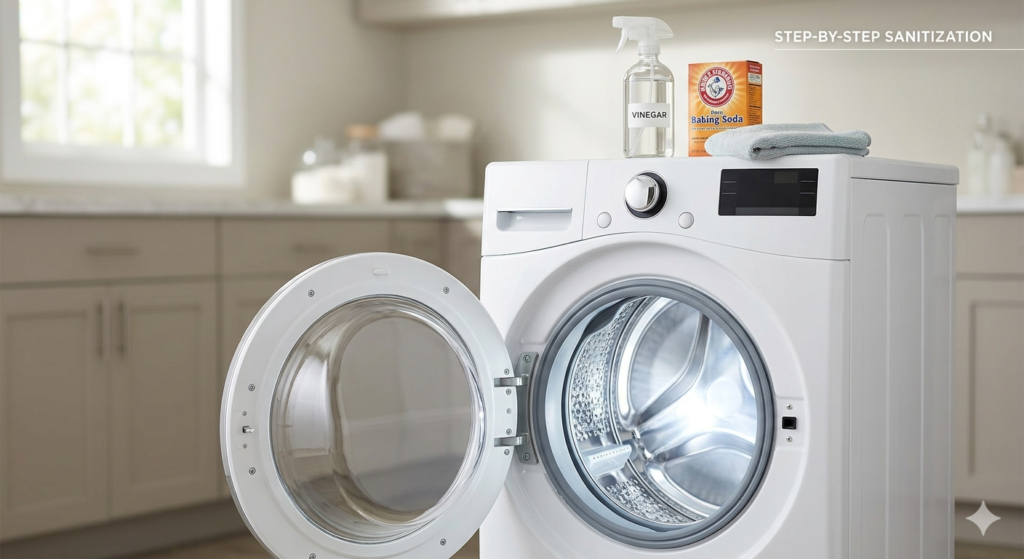
How to Clean a Washing Machine: The Ultimate Sanitization Guide
It is one of the most common paradoxes in household maintenance: why do you need to clean a machine that spends its entire life spinning around with soap and water? The truth is, your washing machine is not self-cleaning. Over time, undissolved detergents, fabric softeners, hair, lint, and hard water minerals accumulate in hidden corners, creating a resilient layer of grime known as biofilm.
When biofilm combines with the damp, dark interior of your machine, it becomes a literal incubator for bacteria and mold. If you’ve noticed your clothes aren’t smelling as fresh as they used to, or if you want to prevent mechanical breakdowns, this guide is for you. Below is the exact step-by-step process to deep clean both front-load and top-load washing machines using science-backed fabric and appliance care principles.
The Hidden Culprits: Soap Scum and Biofilm
Every time you wash a load of laundry, body oils and soil wash off your clothes. If you use a fraction too much detergent or choose a cycle with water that is too cold, that debris doesn’t wash down the drain. Instead, it clings to the outer wash tub, the agitator, and the internal hoses.
This sticky residue acts like a magnet for fungal spores. Within months, a microscopic colony forms. This not only causes foul odors but can also transfer microscopic bacteria back onto your “clean” clothes, irritating sensitive skin and degrading delicate clothing fibers over time.
How to Clean a Front-Load Washing Machine
Front-load, high-efficiency (HE) washing machines are exceptionally prone to mold and mildew because of their airtight design and low water usage. Follow these steps to clean them thoroughly:
Step 1: Scrub the Rubber Door Gasket
The rubber gasket (the bellows) at the front of the machine is ground zero for mold.
-
Mix a solution of one part liquid chlorine bleach to ten parts warm water.
-
Put on gloves, pull back the folds of the rubber seal, and use a microfiber cloth or an old toothbrush to scrub away the gray or black slime trapped inside.
-
Wipe it down with clean water afterward.
Step 2: Clear the Drain Pump Filter
Most front-loaders feature a tiny access door near the bottom front of the machine. Inside is a filter designed to catch debris before it ruins the drain pump.
-
Place a shallow pan and a towel on the floor.
-
Open the door, unscrew the emergency drain tube to let residual water empty out, and then unscrew the filter cap.
-
Remove the lint, coins, or hair trapped inside, rinse the filter under a faucet, and screw it back in tightly.
Step 3: Run the Hot Sanitization Cycle
-
Empty the washing machine drum completely.
-
Pour two cups of white vinegar directly into the drum, or add a specialized oxygen-based washing machine cleaning tablet.
-
Select the “Clean Washer” cycle. If your machine lacks this setting, select the hottest possible heavy-duty cycle with an extra rinse option.
Step 4: Clean the Detergent Drawer
Pull the detergent drawer entirely out of the machine (most have a small release tab in the center). Submerge it in warm water, scrub away any crusty fabric softener or powdered soap residue, dry it, and slide it back in.
How to Clean a Top-Load Washing Machine
Traditional top-load machines use significantly more water, meaning grime tends to accumulate higher up on the drum walls and around the central agitator.
Step 1: The Vinegar Soak
-
Fill the machine with hot water by starting a heavy-duty cycle, but pause it once the tub is full.
-
Add four cups of white vinegar to the water.
-
Let the machine agitate for one minute to mix the solution, then pause the cycle and let it sit undisturbed for one hour. The acid in the vinegar will break down hard water calcium scale and loosen soap scum.
Step 2: Scrub the Upper Rim and Agitator
While the water is soaking, dip a toothbrush into the vinegar water and scrub the top edge of the wash tub, the bleach dispenser, and the crevices on the central agitator column. Dust and lint frequently collect on these dry surfaces during the spin cycle.
Step 3: The Baking Soda Rinse
-
Allow the vinegar water to drain and finish the cycle.
-
Immediately restart the hot water cycle. This time, add one cup of baking soda to the water.
-
Run a complete cycle. The baking soda acts as a mild abrasive and deodorizer, neutralizing any remaining acidic residues and scrubbing away loosened biofilm.
                       WASHING MACHINE CLEANING CHECKLIST

  [ ] Rubber Gasket      -> Scrub with a 1:10 bleach-to-water solution.
  [ ] Drain Filter       -> Drain stagnant water and clear trapped lint/debris.
  [ ] Detergent Drawer   -> Remove, scrub away crusty buildup, and dry.
  [ ] Internal Drum      -> Run an empty, maximum-heat cycle with vinegar or tablets.
4 Maintenance Habits to Prevent Future Odors
Once your machine is clean, keep it that way by introducing these simple habits to your laundry routine:
-
Leave the Door Open: This is the most crucial step. Keep the washer door or lid cracked open after every single load to allow ambient air to dry out the interior drum.
-
Use the Right Amount of HE Detergent: Modern detergents are highly concentrated. Using more than the recommended amount does not make clothes cleaner; it simply leaves excess suds behind to rot inside your pipes.
-
Ditch Liquid Fabric Softener: Liquid softeners are made of silicone and animal fats that leave a waterproof coating on your clothes—and a thick, waxy film inside your machine. Consider switching to wool dryer balls instead.
-
Remove Wet Laundry Immediately: Never let damp clothes sit in a closed machine overnight. This creates an instant humidity chamber that triggers rapid mold spore germination.
Professional Alternatives for Busy Schedules
Deep cleaning appliances and carefully managing fabric care routines takes a significant investment of time and energy. For busy families, professionals, and property managers, keeping up with machine maintenance can feel like an extra chore on an already long list.
If you prefer to skip the scrubbing entirely, outsourcing your clothes to a professional wash and fold laundry service ensures your garments are cleaned in commercial-grade, meticulously maintained systems without you ever having to wipe down a rubber gasket. For delicate, tailored items, using an expert dry cleaners service guarantees pristine fabric preservation without risking home appliance wear and tear.
The stakes are even higher for commercial operators. If you manage a vacation rental, a smelly washer can lead to immediate guest complaints. Partnering with a specialized Airbnb laundry service keeps your property running smoothly with sanitized, fresh linens.
Similarly, high-volume operations like restaurants and corporate spaces require heavy-duty sanitization that home units cannot provide. Utilizing a dedicated commercial laundry service ensures your workforce remains crisp and presentable, while specialized tablecloth and linen laundry services rely on advanced chemical injection systems to eliminate food grease and odors completely, preserving your fabric assets for years.
Conclusion
Learning how to clean a washing machine is an essential part of household care that directly impacts the lifespan of both your appliance and your wardrobe. By committing to a thorough monthly deep clean and practicing smart ventilation habits, you can eliminate odors, maximize efficiency, and ensure that your laundry room remains a place of true cleanliness.
