
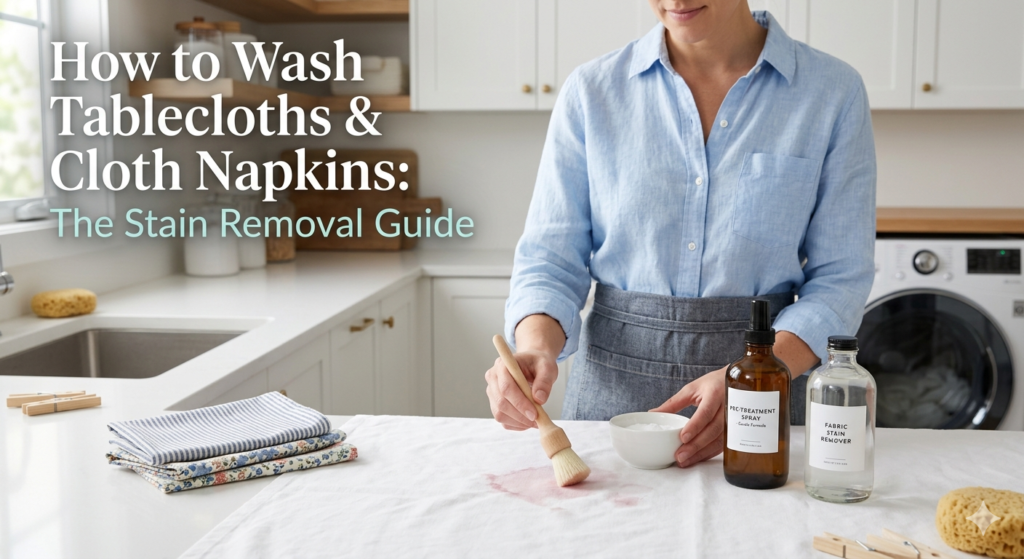
How to Wash Tablecloths and Cloth Napkins: The Stain Removal Guide
Whether you are hosting an intimate family dinner or running a busy event space, beautiful table linens set the stage for a memorable meal. However, a great dinner party often leaves its mark. From red wine spills and candle wax drips to greasy gravy splatters, table linens face some of the most stubborn stains known to fabric care.
If you want to know how to wash tablecloths and cloth napkins without ruining their texture or letting stains set permanently, you are in the right place. In this comprehensive guide, we will walk you through the science of breaking down food-based stains, the ideal machine cycles for linens, and the storage secrets that keep your fabrics looking crisp and bright for their next appearance.
The Golden Rule of Table Linens: Speed is Everything
The moment a spill happens, a invisible countdown timer begins. The longer a food or drink pigment sits on a fabric, the more time it has to bond with the fibers. Once a stain is exposed to the ambient air and dries completely, it undergoes a chemical process that makes it significantly harder to lift.
If a spill occurs mid-meal, do not panic and start aggressively scrubbing the fabric with a napkin—this will only grind the particles deeper into the weave. Instead, gently scrape away any solid food with a dull knife and blot the liquid with a clean, dry white cloth. If possible, apply a small amount of club soda or plain water to keep the area moist until the dinner is over and you can treat the fabric properly.
Step-by-Step: Breaking Down the Most Common Dinner Stains
Different stains require different chemical counter-measures. Treating a grease stain with the same method you use for a wine stain can actually set the blemish permanently. Here is how to handle the “Big Three” table linen offenders:
1. Red Wine and Berry Juices (Tannin Stains)
Tannins are natural plant pigments that bind tightly to natural fibers.
-
The Fix: Immediately flush the stain from the back of the fabric with cold water to push the pigment out. Cover the wet stain with salt or baking soda to draw out the remaining liquid. Before washing, treat the area with an enzyme-based stain remover or a mix of liquid dish soap and white vinegar.
2. Gravy, Butter, and Salad Dressing (Oil Stains)
Oil stains are hydrophobic, meaning water alone will not touch them.
-
The Fix: Lay the linen flat and apply a generous squirt of blue liquid dish soap directly to the dry stain. Rub it in gently with your fingers or a soft tooth-brush. Dish soap is chemically engineered to break apart grease bonds on plates, and it works just as effectively on fabric. Let it sit for 15 minutes before rinsing with warm water.
3. Candle Wax
Never try to wash a linen while the candle wax is still wet and melted.
-
The Fix: Allow the wax to harden completely (you can speed this up by placing an ice cube over it). Once hard, gently scrape away the excess wax with a spoon. Place a plain brown paper bag or a piece of parchment paper over the remaining wax residue and run a warm iron over it. The paper will absorb the melting wax out of the fabric fibers.
Sorting and Machine Settings for Table Linens
Once your stains are pre-treated, it is time for the wash cycle. Treat your table linens with the same care you would accord to premium garments.
-
Separate by Fiber and Color: Never wash bright red cloth napkins with a white linen tablecloth. Additionally, separate heavy items like denim or bath towels from your linens to prevent friction and pilling.
-
Water Temperature: White cotton and heavy polyester linens benefit from hot water, which helps activate detergents and dissolve remaining oils. For delicate linen blends or vibrant colored fabrics, default to warm water to prevent fading and structural shrinkage.
-
The Spin Cycle: Use a medium spin speed. A maximum-velocity spin presses the fabric violently against the washer drum, creating deep, baked-in wrinkles that require hours of intensive ironing to remove.
The Pitfalls of Homemade “Brightening” Tricks
When white tablecloths start to look yellow or dingy, many homeowners instinctively reach for standard liquid chlorine bleach. This is often a critical mistake.
Chlorine bleach interacts poorly with the proteins found in food stains (like milk, eggs, or meat juices) and can actually cause those spots to turn a darker shade of yellow. Furthermore, repeated bleach usage chemically weakens natural fibers, causing your tablecloths to fray and tear prematurely along the fold lines. Instead, opt for an oxygen-based whitening powder or an extended soak in warm water mixed with baking soda and white vinegar.
Professional Care for Flawless Entertaining
Achieving that perfectly crisp, bright, hotel-quality finish on large linens is incredibly difficult with residential appliances. Pushing a massive 120-inch tablecloth through a standard home iron often results in frustration and new creases.
For large events, weddings, or holiday hosting, outsourcing the chore to a professional tablecloth and linen laundry service saves hours of labor. Professionals utilize specialized industrial ironers that press and dry the fabric simultaneously, delivering a completely flat, wrinkle-free finish that is impossible to replicate at home.
For restaurants, catering businesses, and event venues, linen presentation directly impacts customer perception. Partnering with a reliable commercial laundry service guarantees a steady supply of sanitized, pristine linens, allowing your staff to focus entirely on guest hospitality rather than stain removal.
Conclusion
Learning how to properly wash tablecloths and cloth napkins preserves both your financial investment and the memories tied to your dining table. By matching your stain treatment to the specific food type, utilizing smart machine settings, and avoiding harsh chemical bleaches, you can keep your linens looking immaculate for generations of dinners to come.
If the aftermath of your latest dinner party feels overwhelming, or if you simply lack the specialized equipment required to press large fabrics flawlessly, professional help is always close at hand. From everyday wash and fold laundry services for your weeknight napkins to specialized dry cleaners services for delicate heirloom lace, Bolt Laundry is ready to restore your fabrics to absolute perfection.
